Report on our Sacred Journey in Ireland
Sacred Journey in Ireland
18th – 30th September 2025
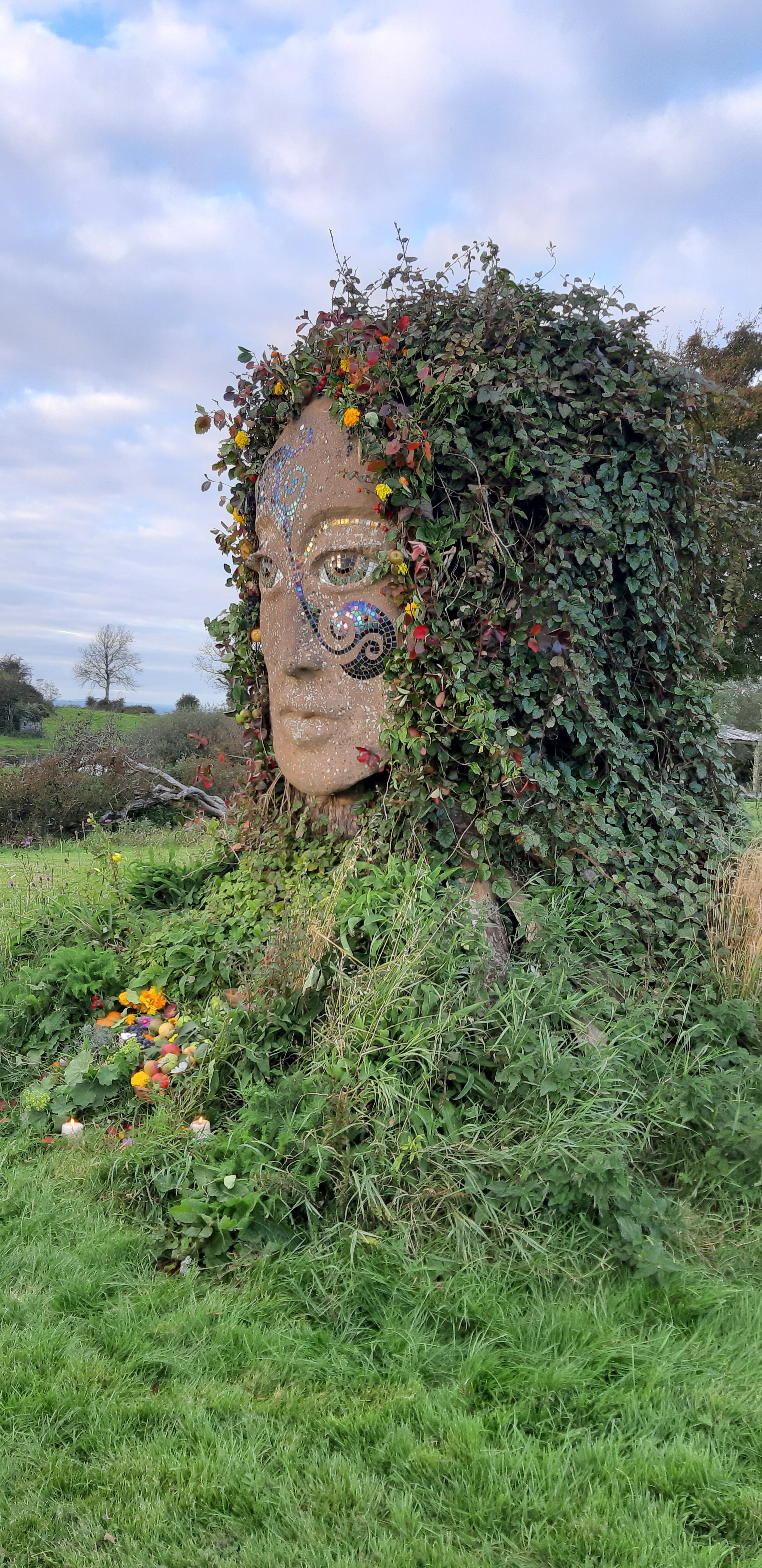
Eriu - Goddess of Ireland
Our journey began in Cork. I knew we were off to a good start, when we were met by the loveliest driver with a coach that was compact enough to negotiate the narrow lanes that I had been concerned about. Phew!
For the most part, we would be travelling up the centre of Ireland, following the orbit of Pluto in relation to Stonehenge as the Sun, making a couple of detours on the way; one to connect with what I had believed to be the source of the Preseli – Stonehenge energy line and the other to connect with the major north-south energy line that flows down from Calanais, through Iona, and eventually to the Giant’s Causeway and down the east of Ireland, passing through the Brú na Bóinne complex of Knowth, Newgrange and Dowth, and through Tara and several other sites to the south of there. I have struggled over many years to find the right name for this line but now believe it should be the Cailleach – Bodach line, for reasons that I hope will become clear.
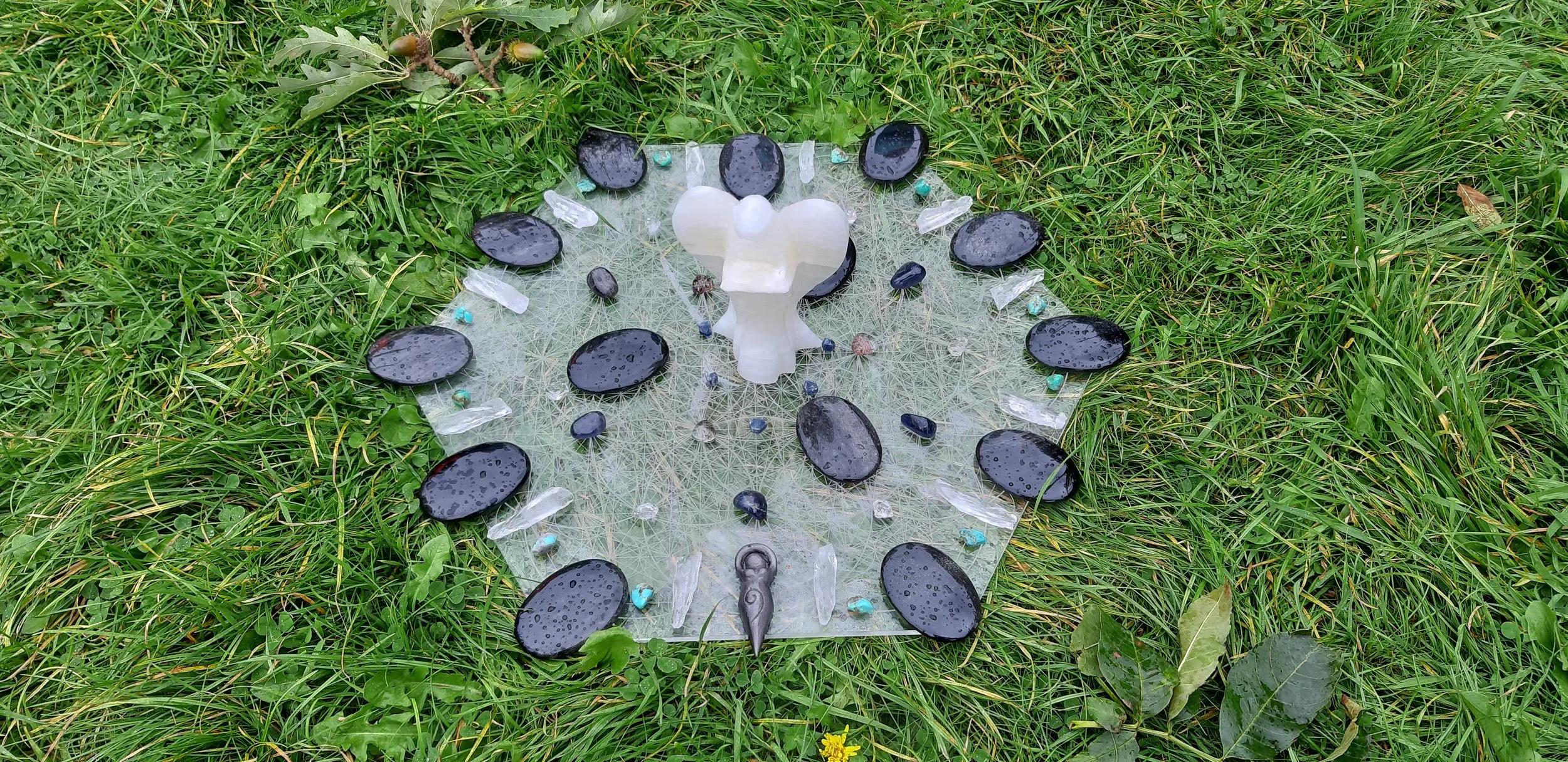
At our opening circle at our hotel in Cork, we passed the talking stick, then Sue introduced us to the crystal grid that she had been inspired to create for our journey.
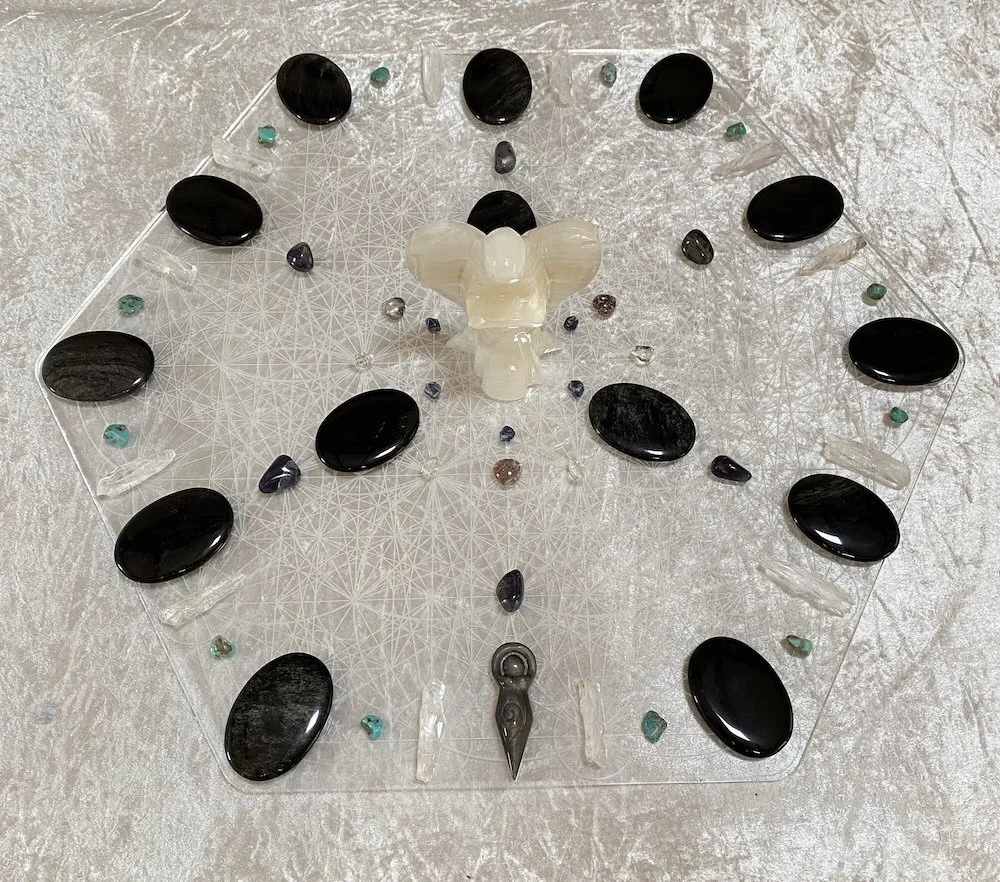
The large White Onyx angel in the centre came to us recently but we actually bought the beautiful Sheen Obsidian Palmstones in 2008. At the time, we were on our way to Wales to work with the orbit of Uranus and were hoping to find the Lemurian Quartz we needed on the way. Although we were not ready for the Pluto work at the time, we nonetheless decided to buy the palmstones and keep them for when the time was right. They lived at Sue’s Mum’s for some years and we used to joke about Pluto being in the conservatory.
The Goddess also came very recently. She was in one of our online sales, along with other crystal goddesses, and we were surprised when she was not claimed - until we realised that we needed her in this grid!
Other crystals are Sapphire, Shamanic Quartz hearts, Iolite, Turquoise and Lemurian Code Keeper Quartz.
We opened the crystal grid whenever we had the opportunity - not often because we changed hotels most days. Sanne carried the goddess to each sacred site then back to the grid.
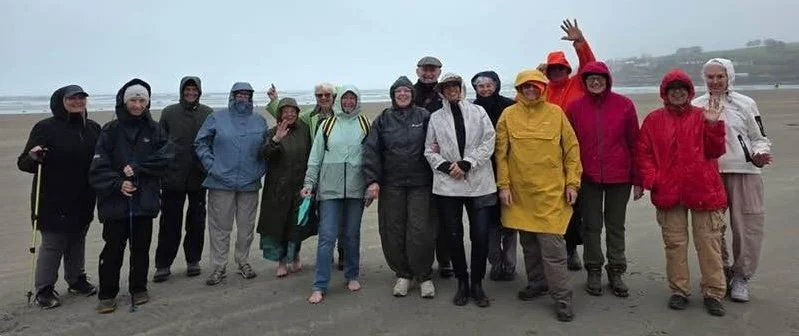
We travelled south to the beautiful expanse of Inchydoney beach to help ground us at sea level, following our flights to Ireland.
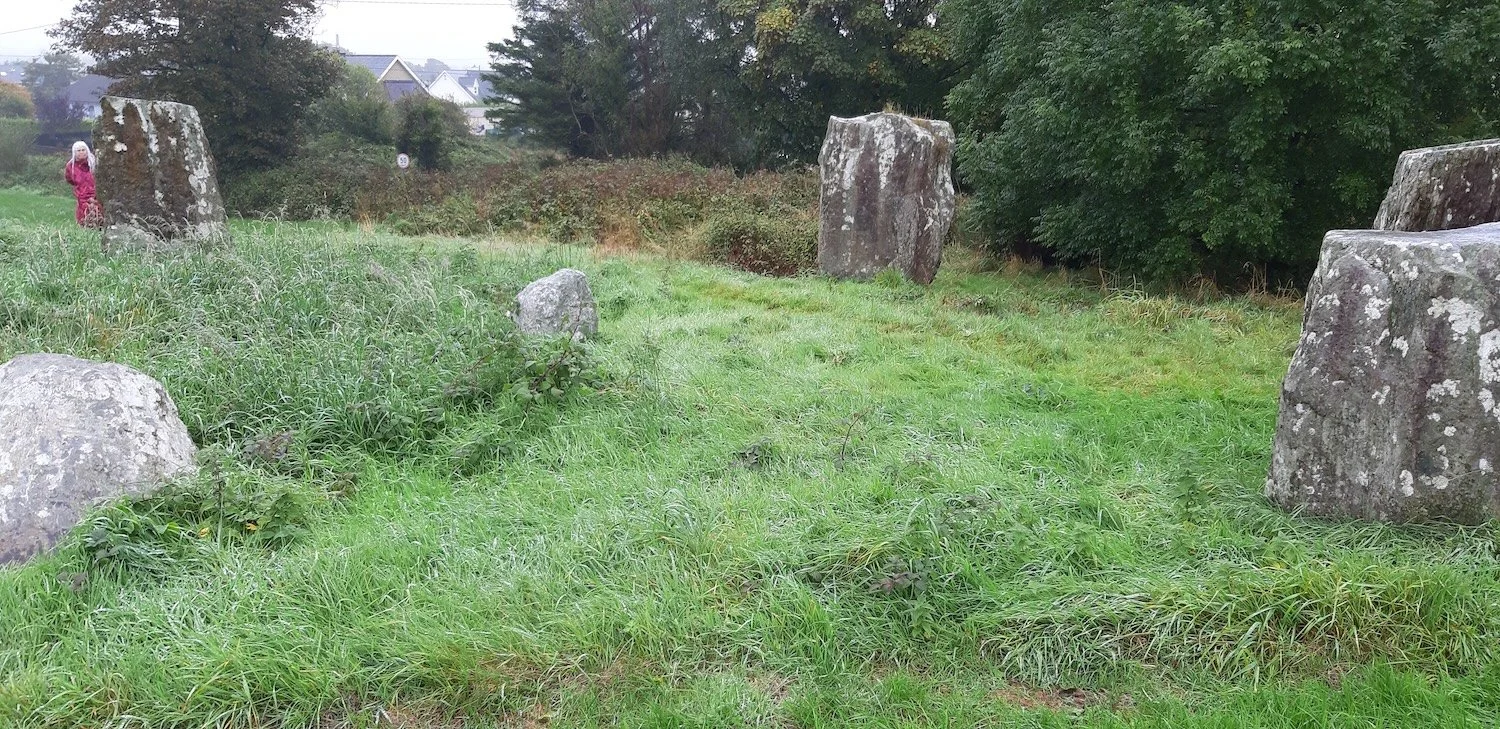
From there, we encountered the raw energy of Pluto, in the pouring rain at our first stone circle, Templebryan the “Druids’ Temple”. This is an imposing group of 5 massive, truncated stones with a quartz stone, Cloich Griene, the “Sunstone” at the centre. The 5 uprights have all clearly had their top sections cut off, which has the effect of rooting their energy deep into the earth, in an extremely powerful way. This is a place for grounding, not for reaching up to the heavens.
Energetically, Pluto acts through the Stellar Gateway chakra, above the Soul Star and Crown, and also through the Earth Star, in the ground beneath our feet. Thus, Pluto brings the pure energy of divine will from the heavens (Pluto / Hades was an Olympian god), down into the Earth, or Underworld, the realm chosen by Pluto / Hades, when he, Jupiter / Zeus and Neptune / Poseidon were casting lots for who was to rule over the Heavens, the Oceans and the Underworld. Through these two centres, the Stellar Gateway and the Earth Star, Pluto enables us to manifest our true will, or “I Am” presence into the world.
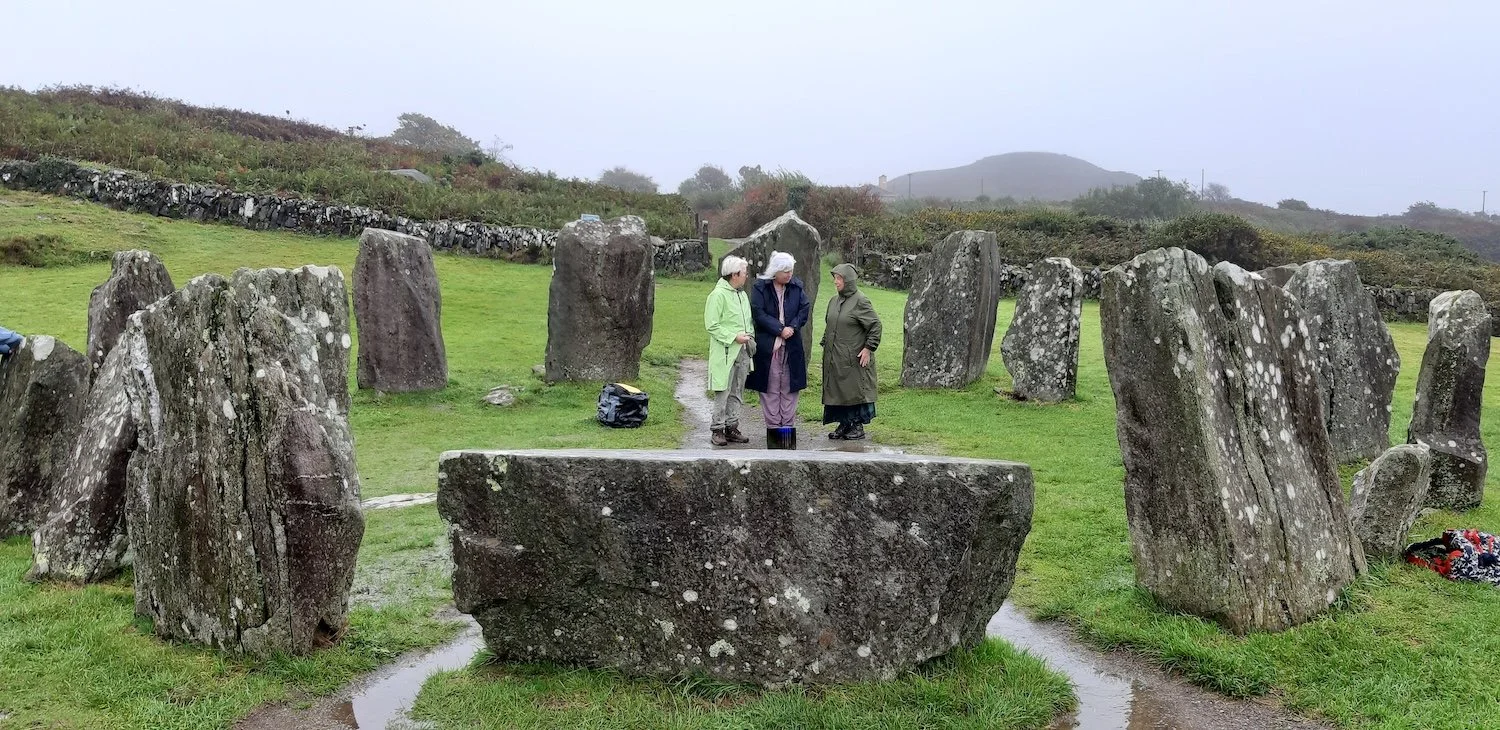
The final site of our first day was the magnificent Drombeg stone circle, originally consisting of 17 stones, with a recumbent stone that is aligned with the setting sun at Winter Solstice. Having spent much of our first day landing and grounding into the energy of Ireland, here was our first opportunity to begin connecting with the more heavenly qualities of Pluto, enhanced by the sound of Sheila’s Preseli bluestone singing bowl and Paddy’s gold singing bowl.
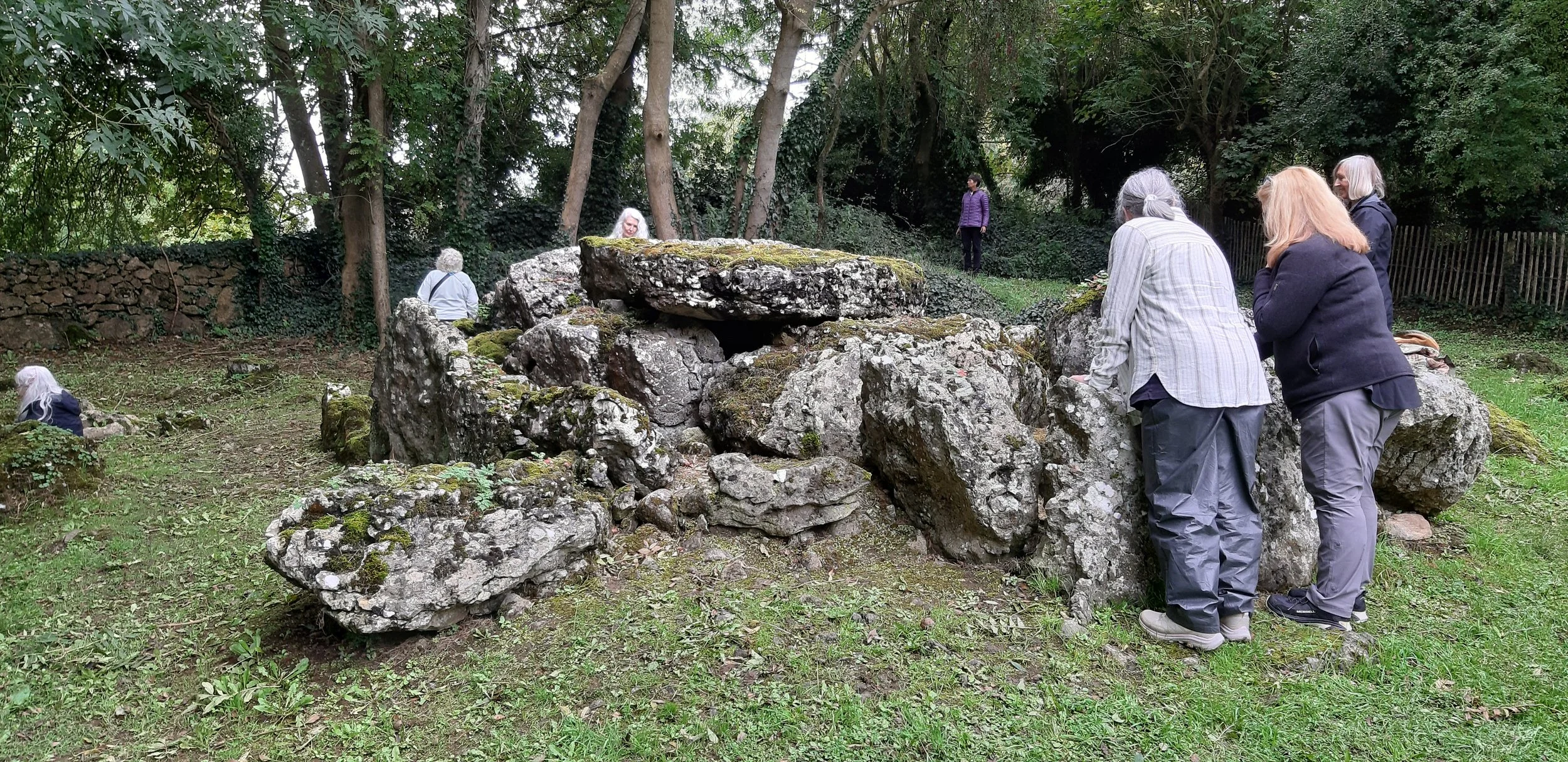
Next day, we travelled northwards to Lough Gur. We picnicked overlooking the lough before honouring the ancestors at the easily missed Lough Gur wedge cairn, tucked away by the side of the road, then we held a simple ceremony at the vast Lios embanked Sun circle at Grange, whose entrance passage aligns with sunrise at Bealtaine and Lughnasadh and with sunset at Samhain and Imbolc. This is the largest stone circle in Ireland, although there was one or possible even two larger circles close by, both of which are now destroyed. The largest stone in the northern quadrant of the circle, over which the midsummer sun rises, is known as “Rannach Crom Dubh”, the Division of Crom Dubh, whose energy and mythology is equivalent to the Roman Pluto, as god of the underworld and in his aspect as Plutus, who generates the abundant growth of crops and the gathering in of Earth’s riches, along with his consort Eithne (Enya), the Irish equivalent of Persephone, represented by the small stack of stones placed next to Rannach Crom Dubh. Here we see the aspect of Pluto that brings alignment with the heavens so as to recreate that heavenly harmony and abundance in down-to-earth ways. Being so vast, the Lios was clearly a place of gathering for the cross-quarter festivals. When we arrived, there was a small group of 4 or 5 people chatting away in the circle, one of whom eventually joined in with our meditation. We were to meet three of the others again the following day on Inis Caeltra / Holy Island.
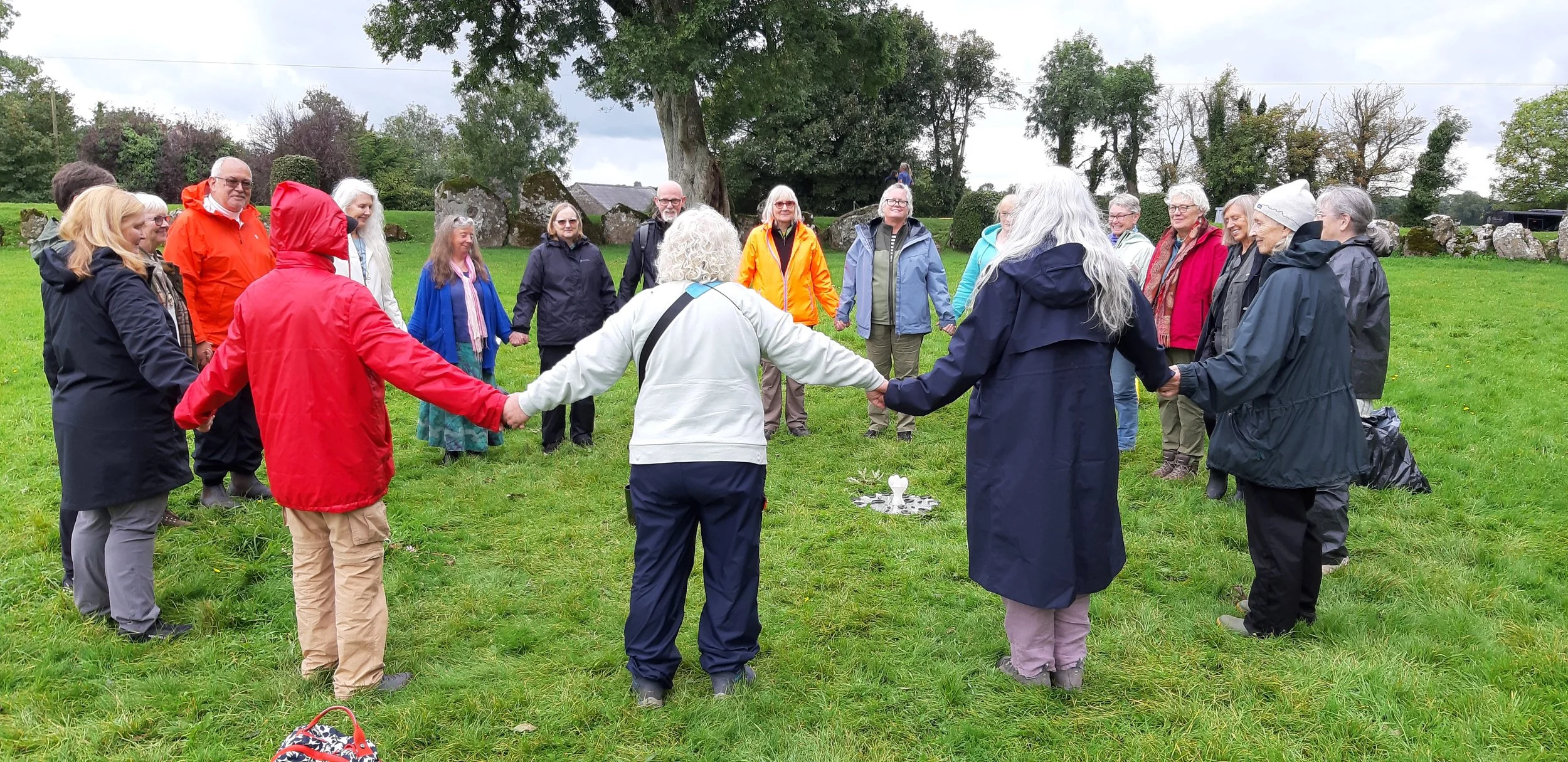
The following day, our first site was St. Cronan’s Church at Tuamgrainey (the tomb of Grainne, the sun-goddess), reputedly the oldest church in Ireland and Britain, which has been in continual use since between 949-964 CE/AD. The oldest part of the church has a deep energy and stillness; the newer mediaeval part, not so much, although it has some fine stained-glass.
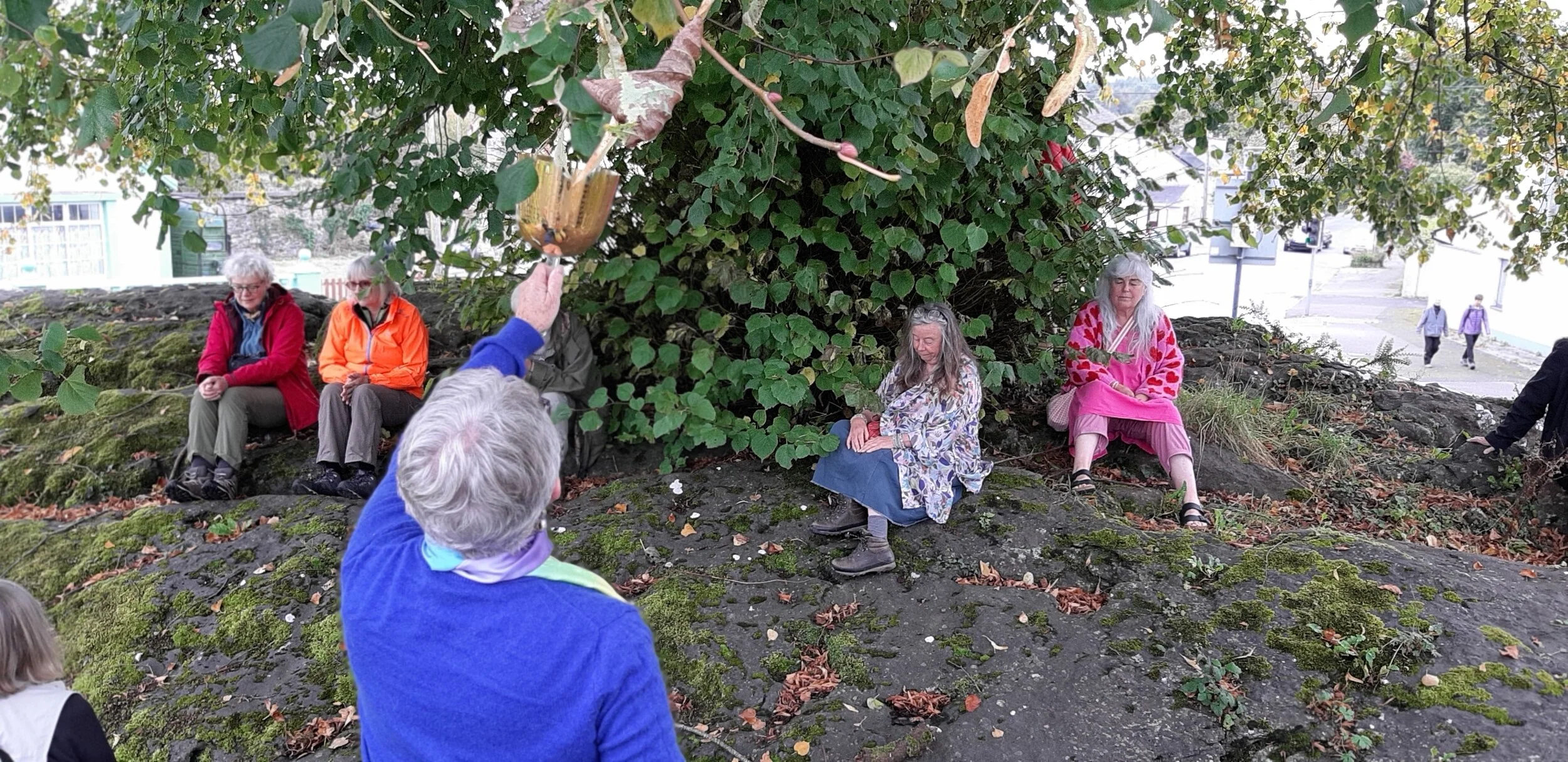
Nearby is the miraculous Tuamgrainey Lime Tree, growing straight out the limestone pavement, in what is now a Catholic garden of remembrance, on a large traffic island in the centre of the village. I dowsed two powerful energy lines crossing here, in front of the shrine of the crucified Jesus, with the three Marys at his feet. The energy emanating from the lime tree behind the sculpture is astonishingly powerful, making it difficult for many of our group to remain standing.
And so, to Holy Island / Inis Cealtra (the island of burials) on Lough Derg. Even today, it is still used for burials, one of the most notable being of local author Edna O’Brien in 2024. A short boat ride with Gerard, the local historian who has written much about the island’s history, took us across to this holy place, which was surely a sacred retreat even before the arrival of Christianity. An imposing round tower is visible for miles around, standing amongst the remains of 6 churches and a holy well. A monastery was founded here by St. Caimin in the mid - 6 th century, which was to become a major seat of learning. We gathered in the sweet energy of St. Brigid’s church. Sue convened a women’s circle in the chapel, whilst the 4 men in our group (including our lovely driver Dan) each held a position at one of the corners of the chapel. As we finished our ceremony, we were joined by three of the folk, whom we had met the day before at the Lios and we exchanged our stories! It was not until we had all landed back at the jetty on the mainland that we realised what an altered state we had all been in, during our 2 hours on the island.
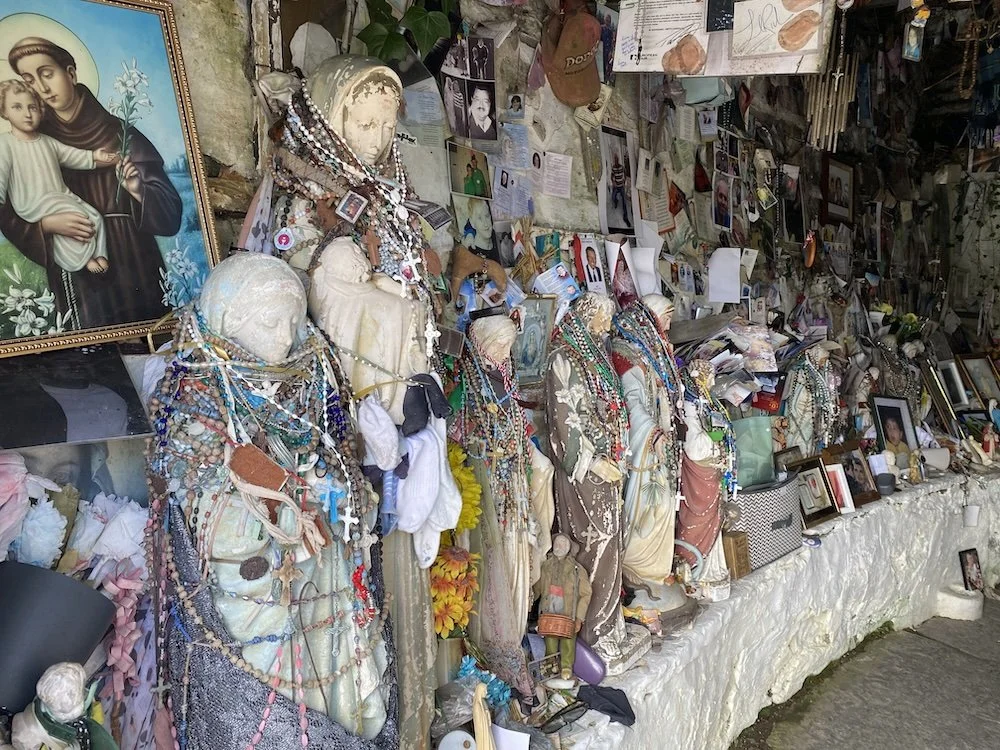
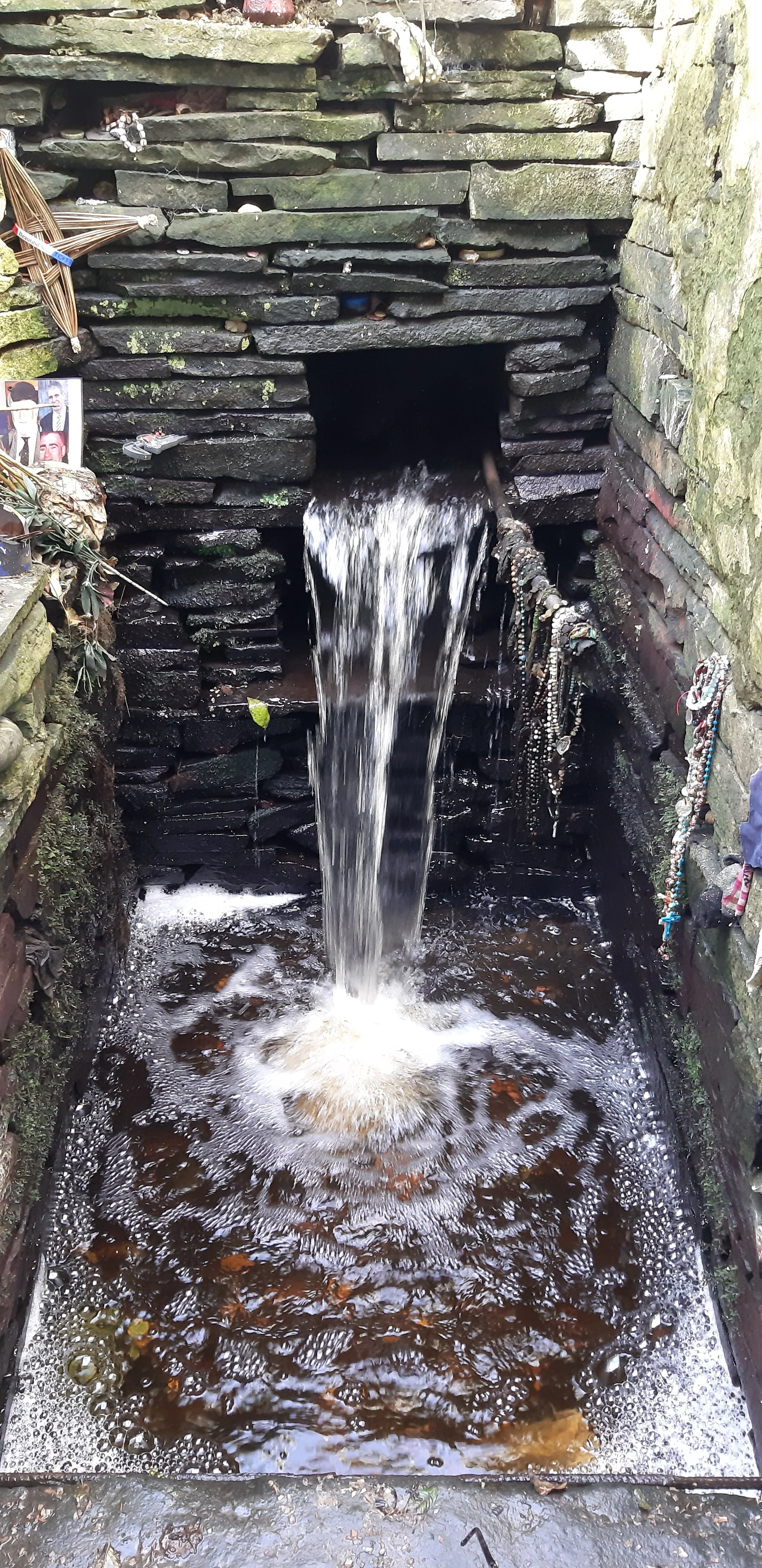
The next day, we veered off westwards to follow the Stonehenge – Preseli energy line, coming from Wales, to what I believed was the energetic source of the line’s female and male currents. St. Brigid’s Well at Liscannor is the most amazing place, a beautiful healing well, right by the side of the road, with a low curved passage festooned with votive offerings, photos, portraits of loved ones and much, much more. I dowsed the female current of the Preseli-Stonehenge energy passing through the passage to the well and beyond. I asked my pendulum if this was the source of the energy line and got a clear “no”, with the sense that there was an island offshore where the energy originated. On looking at the map later, it was clear that these were the Aran islands, which are filled with ancient sites, so another trip is required to explore that sometime!
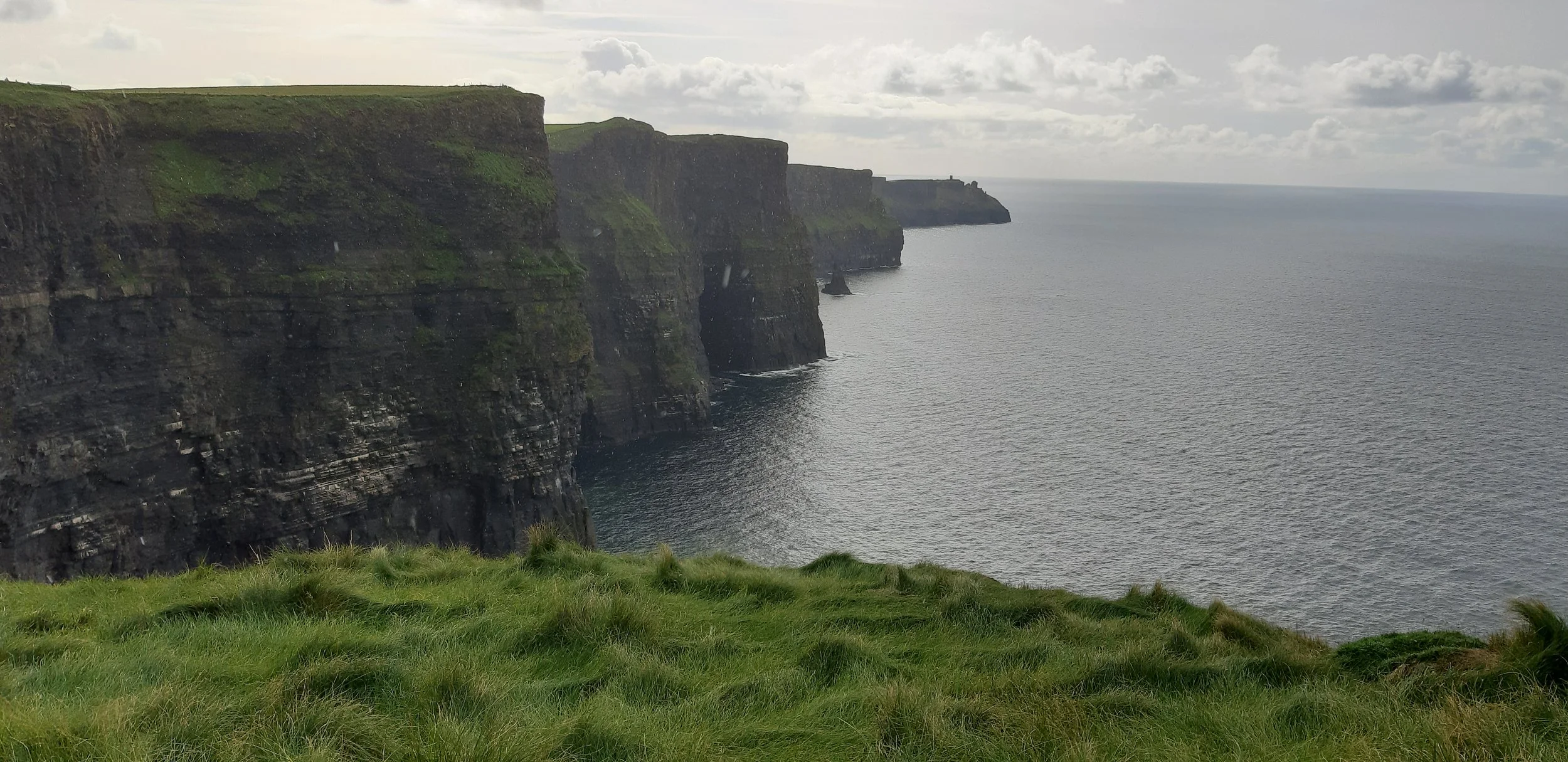
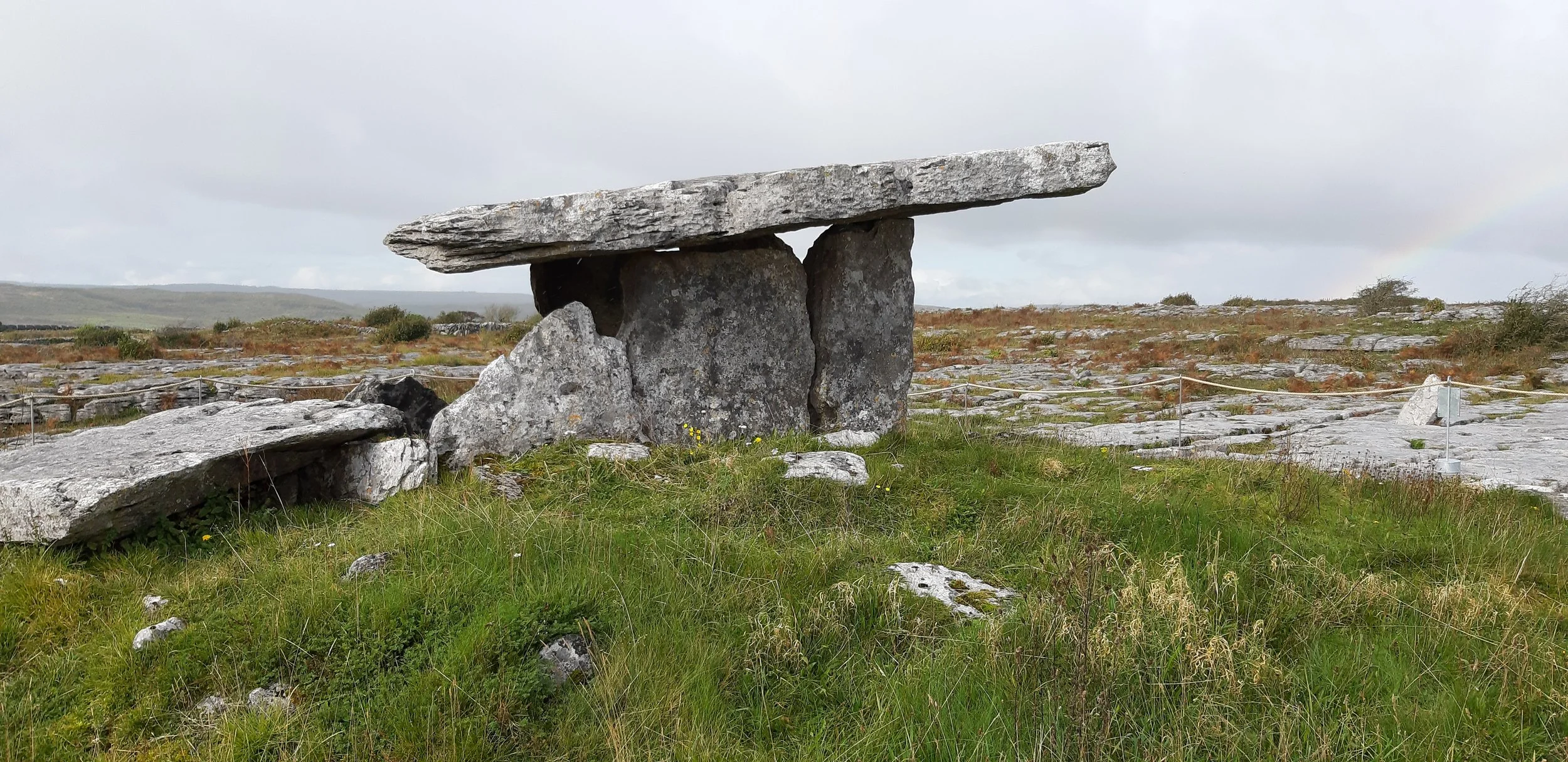
Our next stop was at the nearby Cliffs of Moher, where I dowsed the male current of the Stonehenge – Preseli energy line making landfall above the large sea cave, which was used as a film location in Harry Potter and the Half-Blood Prince. From there, we travelled northwards through the uniquely strange landscape of the Burren to the picturesque Poulnabrone Dolmen. When Sue and I had been there the previous October, the energy had not felt particularly strong to us (although our puppy Merryn did slip her harness and go bonkers for a while), but now on the evening before the Equinox, energy was just surging through the portal. We gathered in a circle on one side and a woman who had been hovering nearby asked if she could join us; it turned out that she was a refugee from Ukraine, with very little English. It being the eve of Equinox, our meditation focussed on Peace and Balance. And so, on to our Galway hotel, from where after a late dinner a few of the group could still muster enough energy to enjoy some traditional Irish music at a nearby pub.
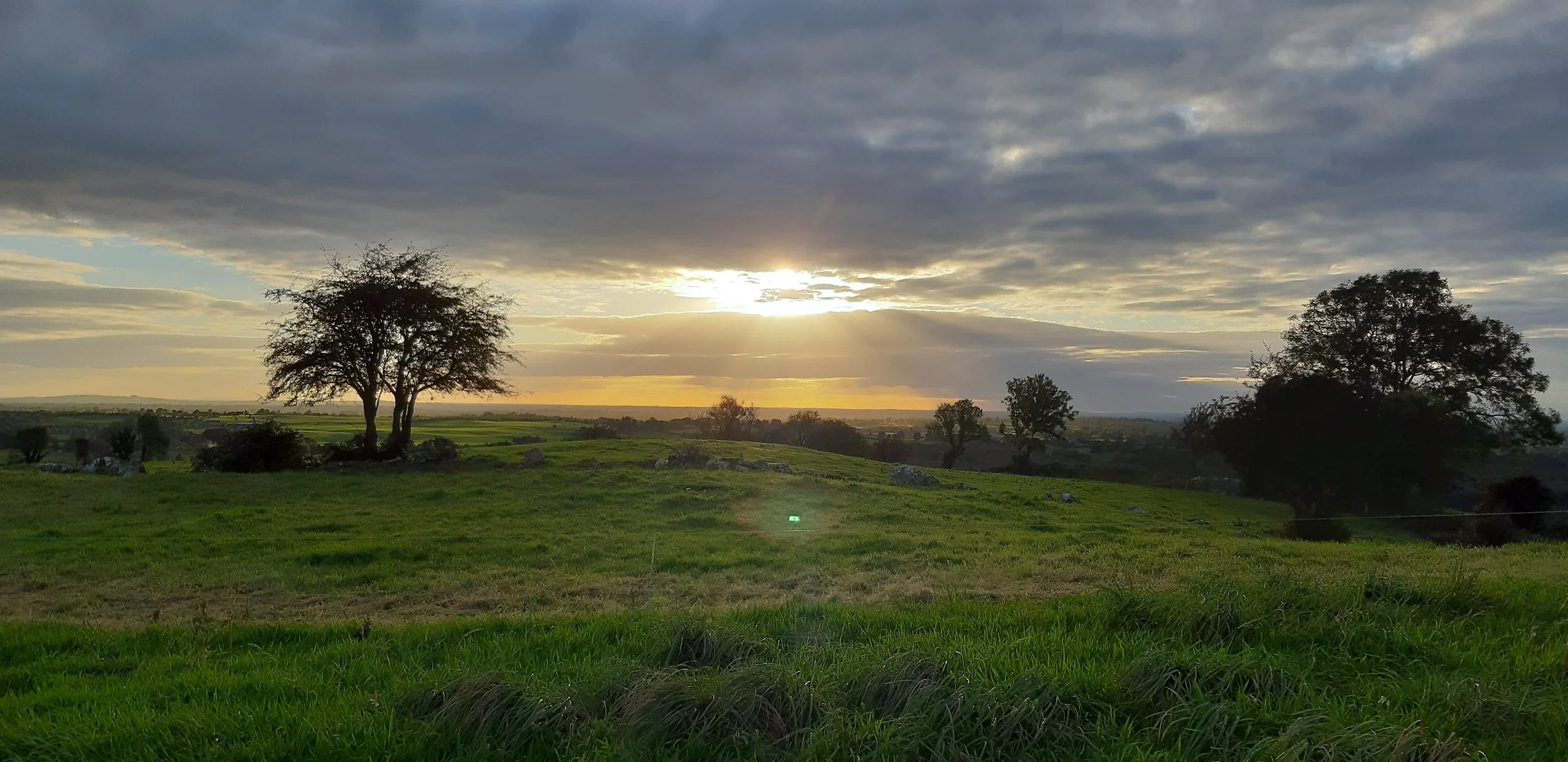
We awoke to a beautiful, clear Equinox day and journeyed back towards the central line of our path along Pluto’s orbit, to Ireland’s Ancient Centre, the Hill of Uisneach. On the way we stopped at the heart-shaped St. Brigid’s Holy Well, just a short distance from Uisneach. We had arranged to join a gathering that evening, to experience the equinox sunset at Uisneach, and along with several others, were treated to a tour of the various temple sites on the Hill, accompanied by traditional tales of the Sidhe (fairy-folk) from our ebullient guide, Shaun. We spent some time at the Aill na Mireann (stone of the divisions), the navel stone of Ireland, the meeting point of the 4 ‘divisions’ or provinces of Ulster, Leinster, Munster and Connacht; then from the summit, we were treated to a most exquisite sunset, followed by hot whiskey and soup, back at the visitor centre, accompanied by some more strange tales from Shaun.
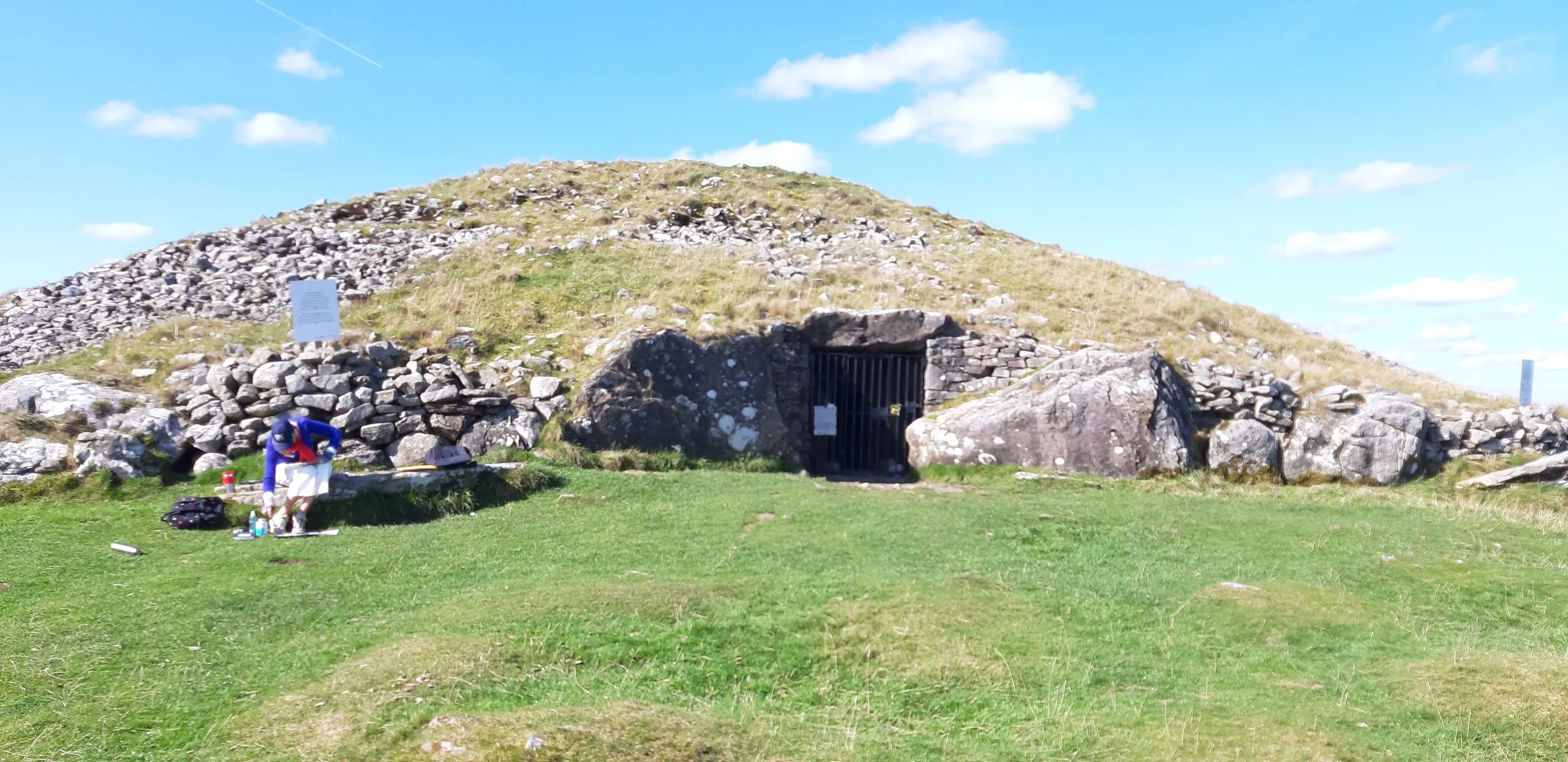
Next morning, we made the climb up to Loughcrew Cairns, to Cairn T and the ‘Hag’s Chair’. This hill is known as ‘Sliabh na Caillagh’, the hill of the Cailleach, hag, or wise woman, who represents Mother Earth in her Winter aspect. She manifests the feminine aspect of the Pluto energy, concerned with the processes of decay, death and regeneration, the descent from autumn into winter that will eventually bring about the birth of the young maiden, Brigid at Imbolc, the beginning of Spring. In times past, it was possible to collect the key for Cairn T from the nearby café, to view the stone with amazing sun carvings and spirals, which is illuminated by the Equinox sunrise shining up the passageway. Sadly, due to modern graffiti on some other cairns, there is no longer any easy access to the interior of Cairn T. However, it is still possible to sit on the Hag’s Chair; it is aligned to the North, so that by sitting on it, you align your central core energy with the spinning of the Earth, and the Polestar. We formed a semi-circle around the chair, and to the gentle heartbeat of the drum, took it in turns to do just that. Once again, after we landed back at Loughcrew café, we realised just what an altered state we had been in. So instead of our planned visit to a somewhat neglected and incomplete nearby stone circle, we opted for gentle walks in the beautiful gardens of Loughcrew Estate, with its amazing yew trees and amusing, quirky sculptures.
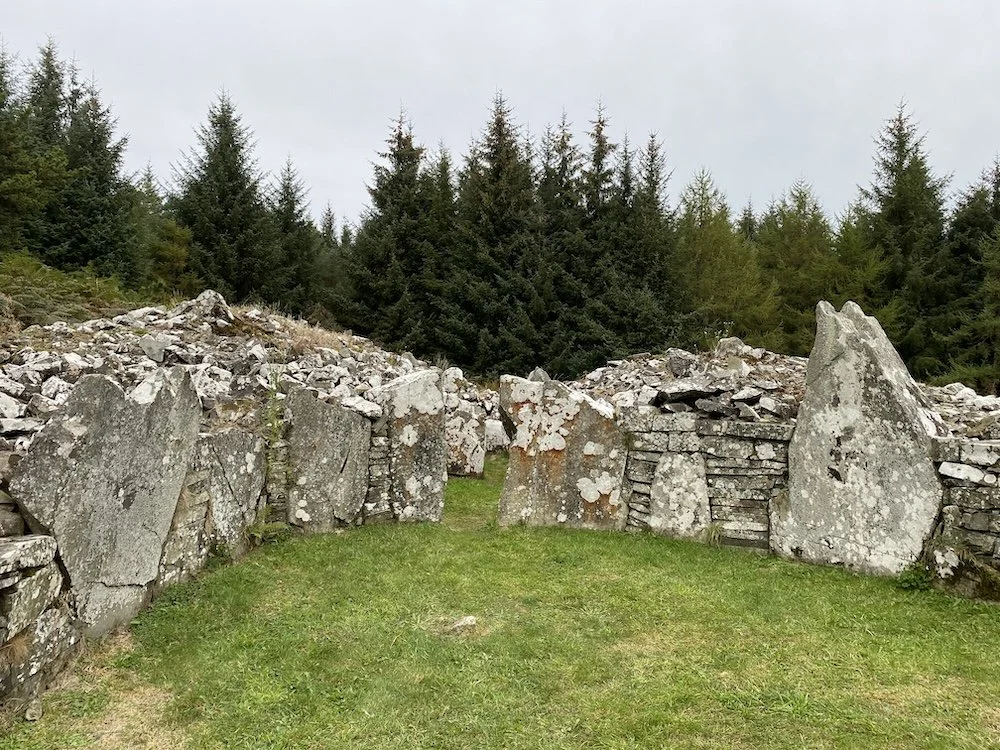
Our theme of gentleness continued the next day, with a short walk through a pine forest to the beautiful healing energy of Annaghmare Court Cairn, meaning the ‘Ford of the Dead’, and known locally as the ‘Horned Cairn’. Court cairns are unique to Ireland and south-west Scotland, consisting of an enclosed, covered cairn or tomb, with an open ‘court’ area in front, presumably for gathering to honour the ancestors. Annaghmare, thought to date from around 3,600 BCE, is a fine example and has a very gentle energy. The ancestors and the Sidhe seemed to greatly enjoy the sound of the Preseli and Golden bowls.
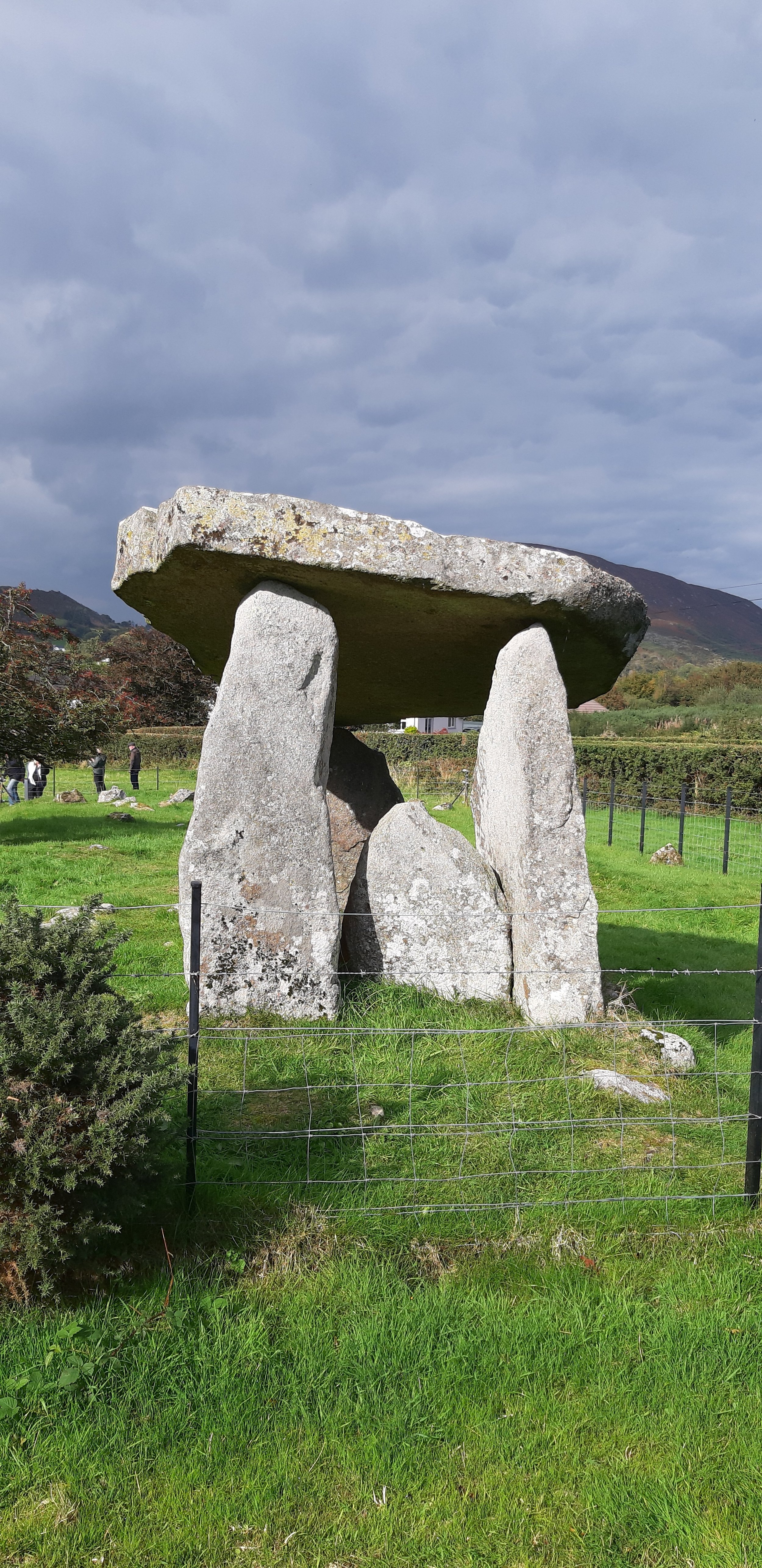
Ballykeel Portal Tomb is a dolmen that nestles in the valley, and is aligned with the great cairn atop Slieve Gullion, said to be the home of the Cailleach, to which we would hike the following day. Ballykeel is also known locally as the ‘Hag’s Chair’, the folklore being that she would fly down from her home at Slieve Gullion to sit on the Portal Tomb which served as her throne. I dowsed an energy line coming from the direction of the mountain top to the portal tomb, which presumably marked her flightpath down for her to sit on her throne!
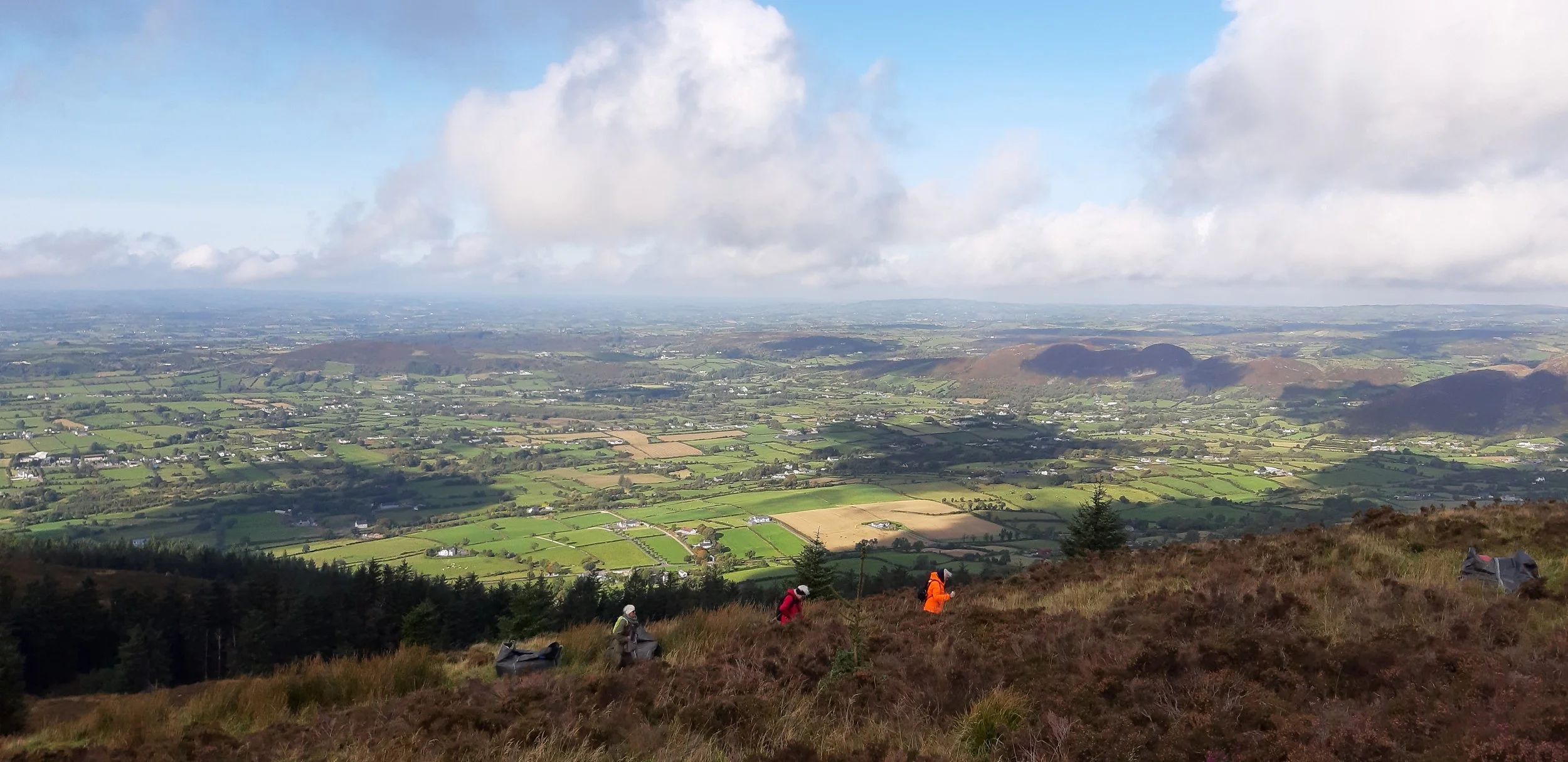
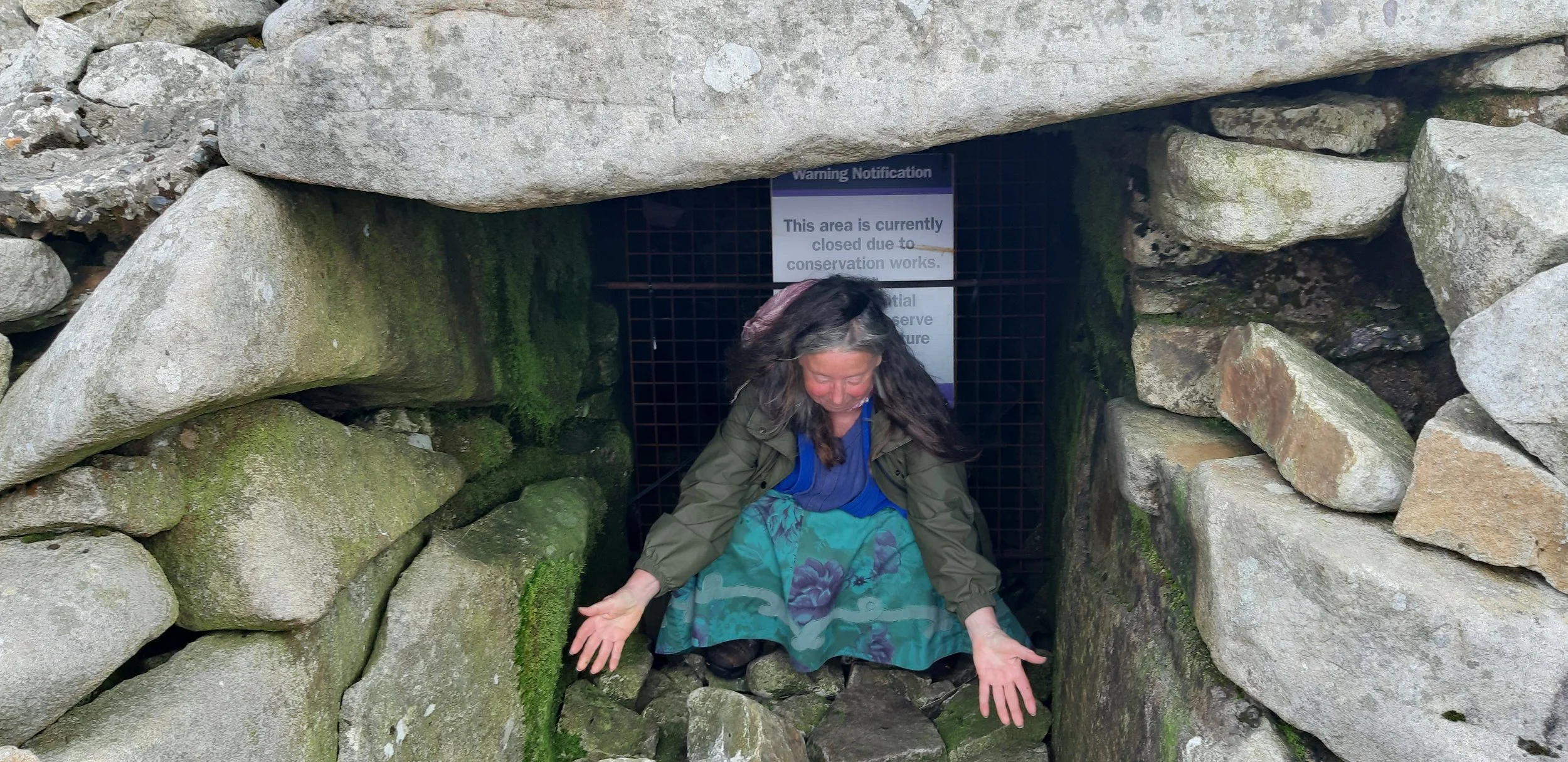
Next day was our hike up Slieve Gullion and the weather smiled upon us! It is the highest point in Northern Ireland, with stunning views in all directions. The massive cairn at the top, home of the Cailleach, has its entrance aligned on the mid-winter sunset, the darkest point of the year, also the point where the light begins its return for the year ahead. When we reached the summit, the entrance to the cairn was closed, due to essential repairs to the collapsed roof. So, we gathered in the passageway and drummed quietly to honour the home of the Cailleach, on the day when our dear Sheila had literally just become a grandmother herself! After our hike back down, with the much appreciated help of gravity, we followed the circular drive through Slieve Gullion Forest Park and then gently back to earth at Clontygora Court Cairn, where we were greeted by two friendly donkeys in the next field.
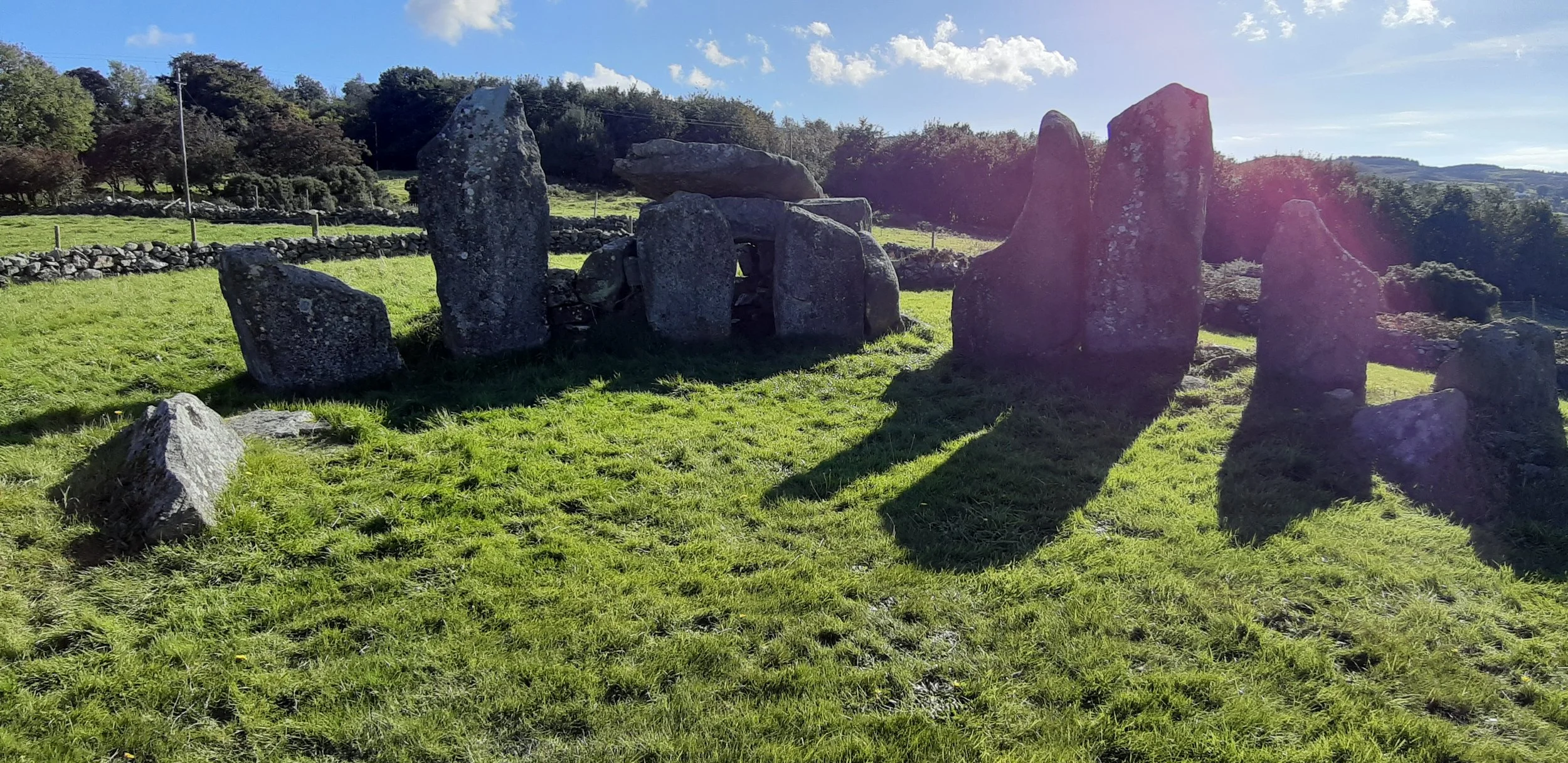
Next day, we continued northwards to Ballynahatty, the Giant’s Ring, a huge henge, with a small passage tomb, or dolmen at its centre. Sheila managed to squeeze inside to play her Preseli bowl; the acoustic effect of the structure amplified the sound, which could be felt rippling out to fill the vast henge that surrounded us. We were joined by a very curious chap on holiday from Australia. He was a bit wary of us at first, but once he realised that we weren’t some strange cult, he seemed to relax and joined in!
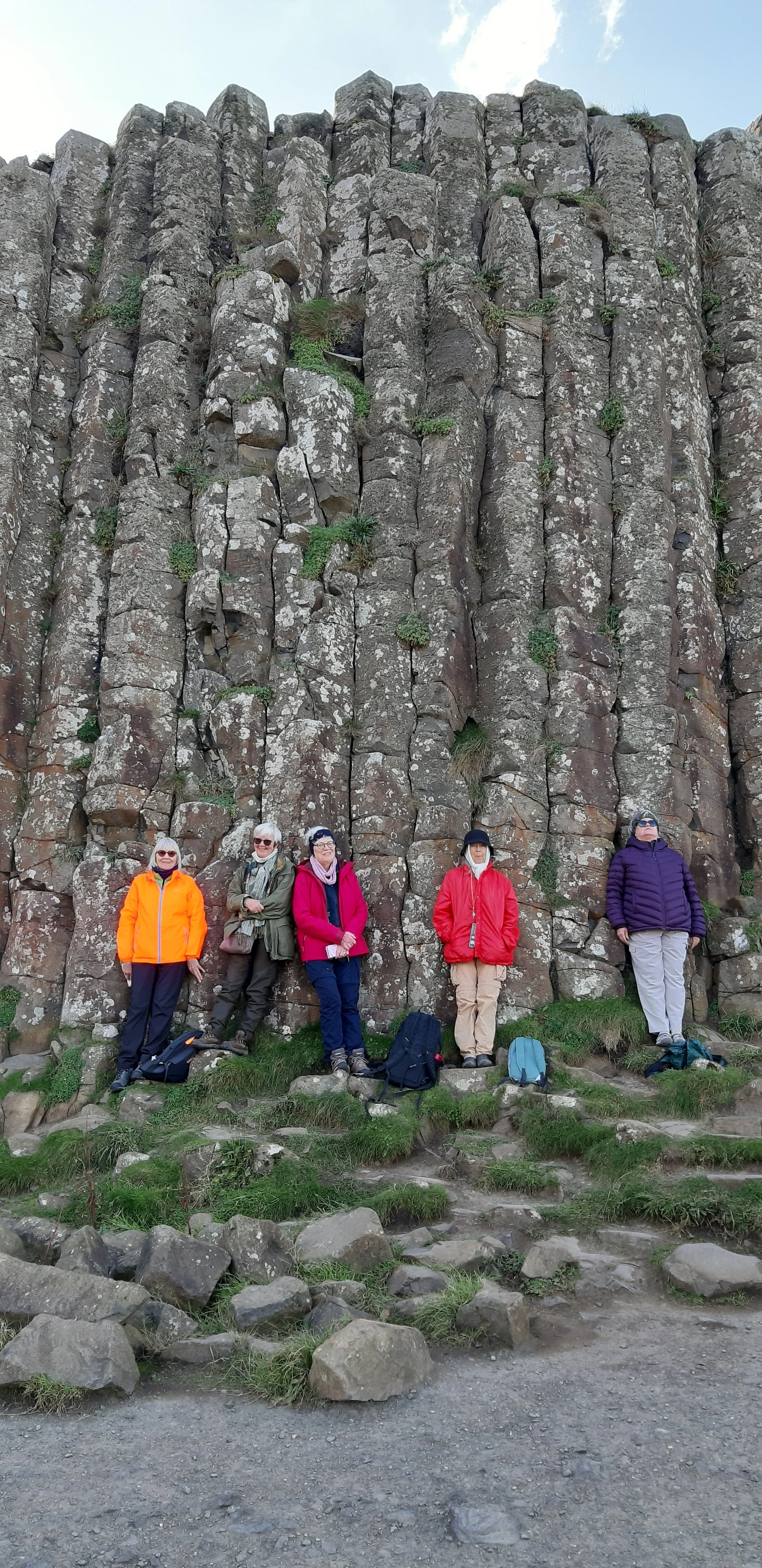
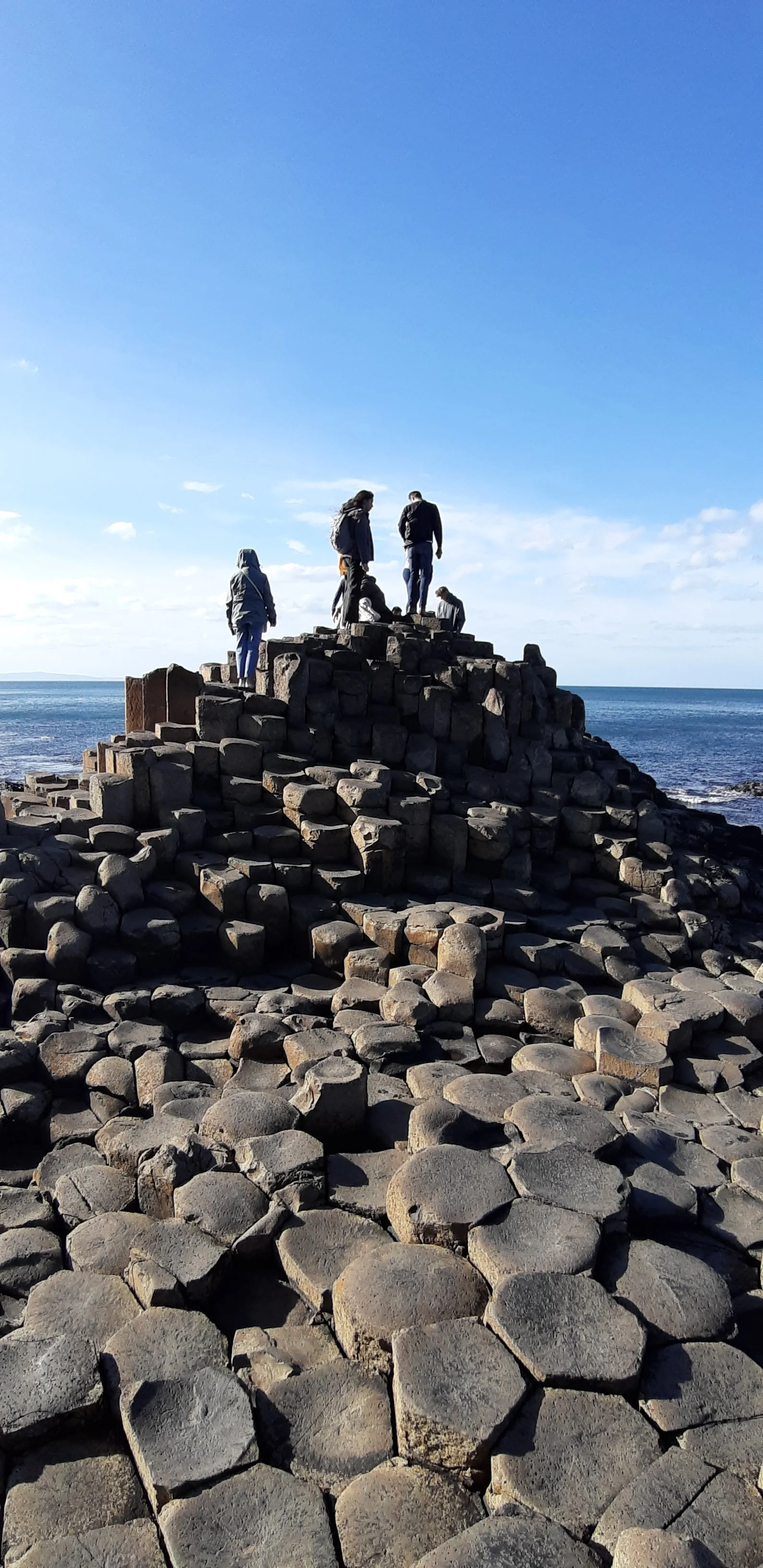
We continued northwards, from the Giant’s Ring to the Giant’s Causeway, with its interlocking, hexagonal basalt columns, the result of an ancient volcanic fissure eruption around 50 – 60 million years ago. This is truly a Plutonic place, which marks the landfall of the male (Bodach) current of the Cailleach – Bodach line which flows down from Calanais (Cailleach-nish). I believe the female (Cailleach) current comes in a few miles to the east of the Giant’s Causeway. The Bodach was the husband of the Cailleach, sometimes identified with the sea-god Manannan an Lir, who also has associations with the Isle of Man. We arrived at the Causeway and formed a circle, with each person standing on a basalt column, then meditated to connect our central core column of light running from the Stellar Gateway to the Earth Star, with the raw volcanic power of Pluto. Then we explored the rest of the site individually, whilst negotiating the hundreds of tourists.
Our next morning began with a flat tyre on the coach, which was quite quickly fixed by a nearby tyre repair shop. Then we got absolutely drenched at the beautiful Ballynoe Stone Circle, one of the oldest circles in Ireland, dating from around 3,000 BCE. It consists of a large stone circle with a tumulus at the centre, aligned on the midsummer sunset to the west-south-west, with a horseshoe of kerbstones, partially surrounding the mound. The circle with horseshoe has echoes of Stonehenge about it. There are also several outlying stones that may act as the markers for significant sunrises and sunsets. This is a truly magical place, with a gentle, yet powerful energy. It would have been nice to have spent longer, but the weather gods had other ideas!
That afternoon we travelled southwards to Fourknocks chambered cairn, just south of the Boyne valley sites, which we would visit the following day. It is reassuringly quaint in these times to still be able to knock on the door of a nearby bungalow and pay the 20.00 euros deposit for the key to the beautiful space that is Fourknocks (the ‘cold hills’) chambered cairn. There is neolithic art on the lintel stones, in the form of (energy) chevrons, lozenges and the outline of a goddess face on a stone near the entrance passage. We were joined by a local woman, who happened to also be a keyholder. It is a rare privilege to be able to have silent time in such a sacred place.
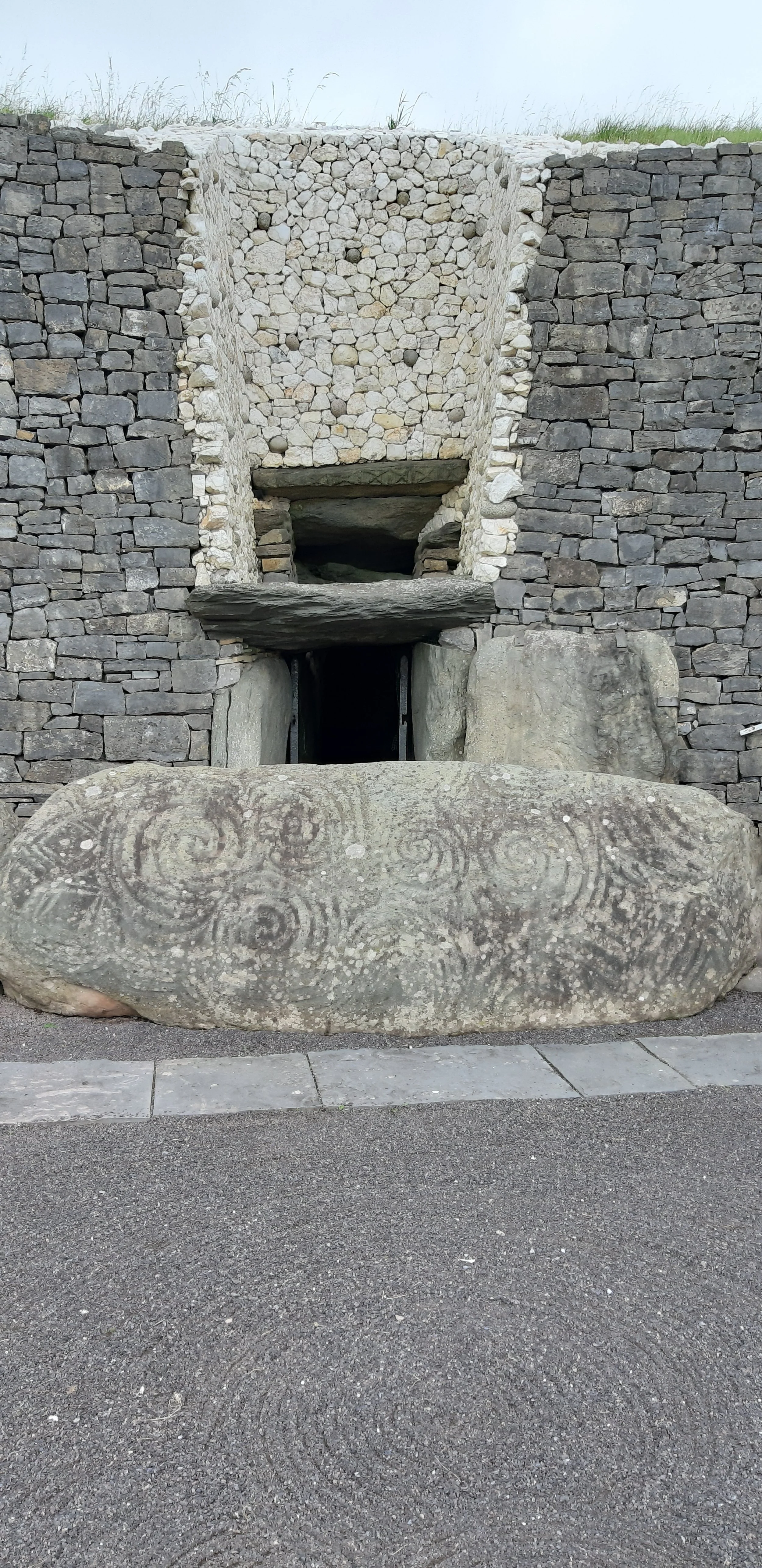
The following day, we headed to our appointment at Knowth and Newgrange. Back in the late 1990’s / early 2000’s it was still possible to obtain the key to Dowth from the office at Newgrange and it was a privilege to have made three visits into the chamber during those years. Sadly, the key is no longer available to us mere mortals, only to bona fide archaeologists. Nevertheless, Knowth is always a wonder to visit, having the largest collection of Neolithic art in Europe, etched onto its kerbstones. Knowth has two passageways aligned to the East and to the West, to mark the sunrise and sunset at the Equinoxes. The inner chambers of Knowth are too narrow and unsafe for visitors to access. And then, there is the wonder of Newgrange. Due to our numbers, it meant that just members of our group would be inside together, two of our group having opted to go in with a previous cohort…and one other (who shall remain nameless) actually snuck in twice! As it was just us, this meant that Paddy was able to sound her golden bowl inside, which was a truly moving experience. And another altered state experience when we returned to the outside again!
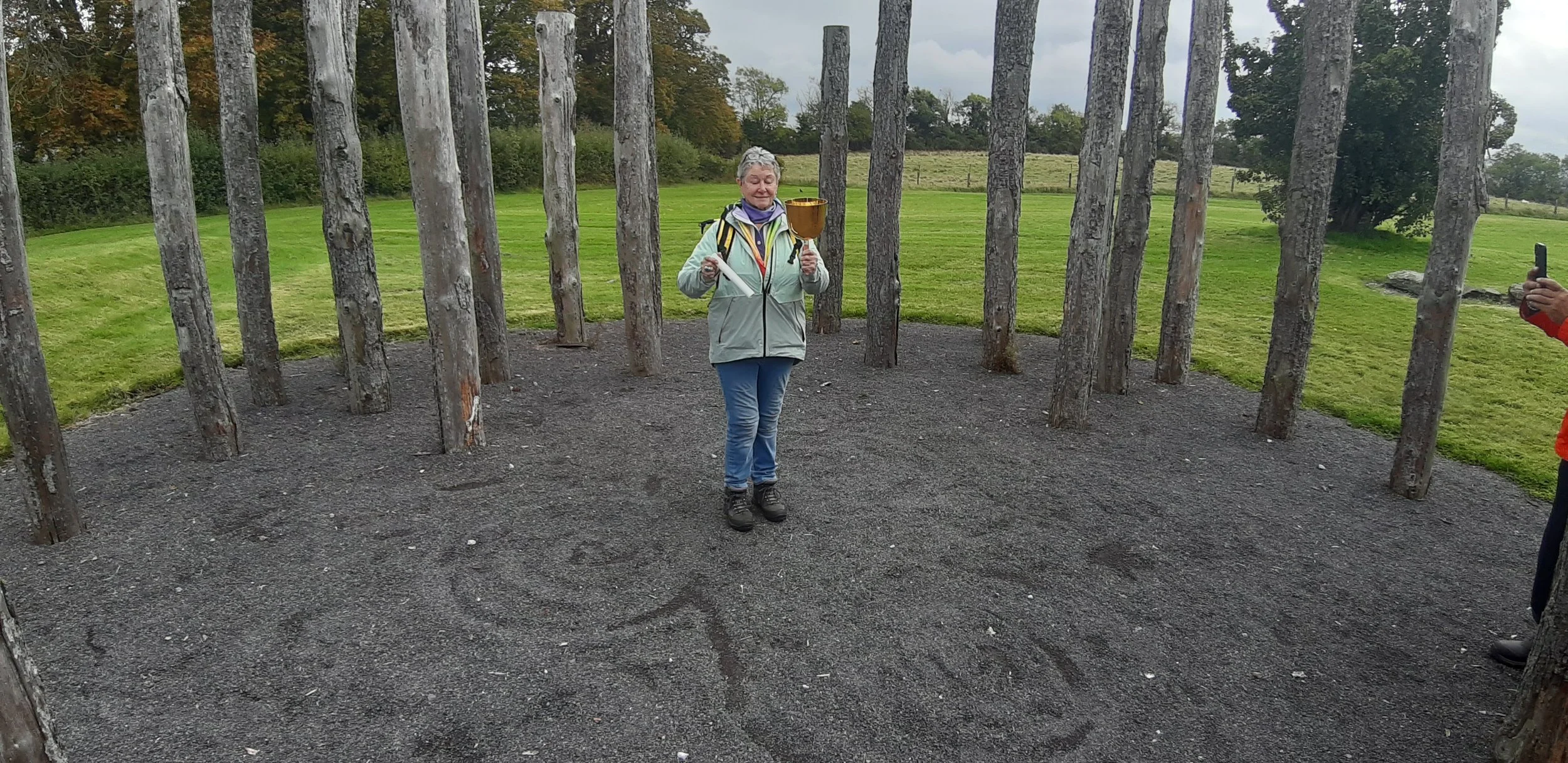
From Newgrange, we drove to the Hill of Tara. We entered by the processional route into the site, laughingly known as the ‘Banqueting Hall’. We crossed the Rath of the Synods, damaged by British Israelites between 1899 and 1902, who dug it up in their quest to find the Ark of the Covenant. (They also used dynamite on one of the cairns at Loughcrew, presumably believing that the Ark was indestructible!) – they didn’t find it in either location. We walked past the Mound of Hostages, the oldest structure on Tara, whose entrance is aligned on sunrise at Samhain and Imbolc, and which used to host the Lia Fail, Stone of Destiny, on the top of the mound, until it was moved to its present position, off-centre on the Forradh or Royal Seat. Next to that is Teach Cormac, named after one of the ancient High Kings of Tara. Together these two raths form a lemniscate, or infinity symbol, with the Forradh being convex, and Teach Cormac, concave. As it was quieter, we opted to hold our ceremony in Teach Cormac. In spite of being quite a shallow bowl-shape, the acoustic properties of the singing bowls were greatly amplified by being in there.
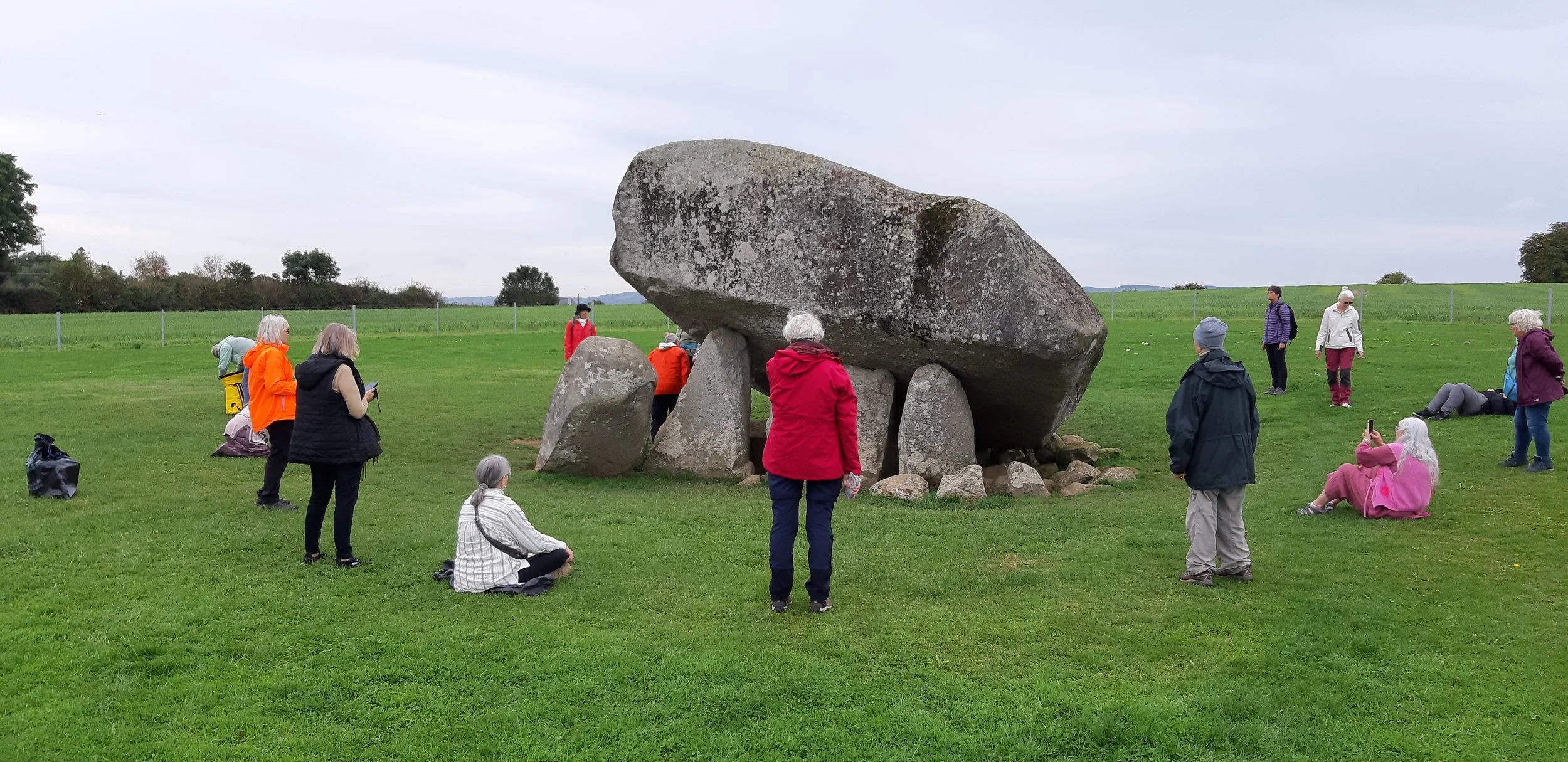
For our final day, we had planned to visit the beautiful Athgreany Pipers’ Stones, but Sue had read that they were no longer accessible, after the farmer had closed off access to the site, due to vandalism there. This was sad, as it is one of my favourite sites, with stones clearly aligned to the solstices, equinoxes and quarter days, which my dear friend Kevin Hayes believed was used for teaching the ancient mysteries. So, this set me on a search for an alternative site for our last day. I came across Browneshill Dolmen, which looked interesting, was about the right distance from where we needed to be and had easy access and parking. Its 100-tonne capstone is thought to be the largest in Europe. When we arrived, we could see another group gathered around the dolmen and were greeted at the carpark by some nice ladies, with a table of sandwiches, teas and coffees all laid out. Apparently, it was for the launch of a local location app, a bit like a version of ‘What 3 Words’, from what I could gather. On our way up to the stones, we were met by the other group coming down, which seemed to include the mayor and other be-chained dignitaries...I thought to myself “this would never happen back home in the UK.” The dolmen itself has a very powerful presence, with a deep stillness.
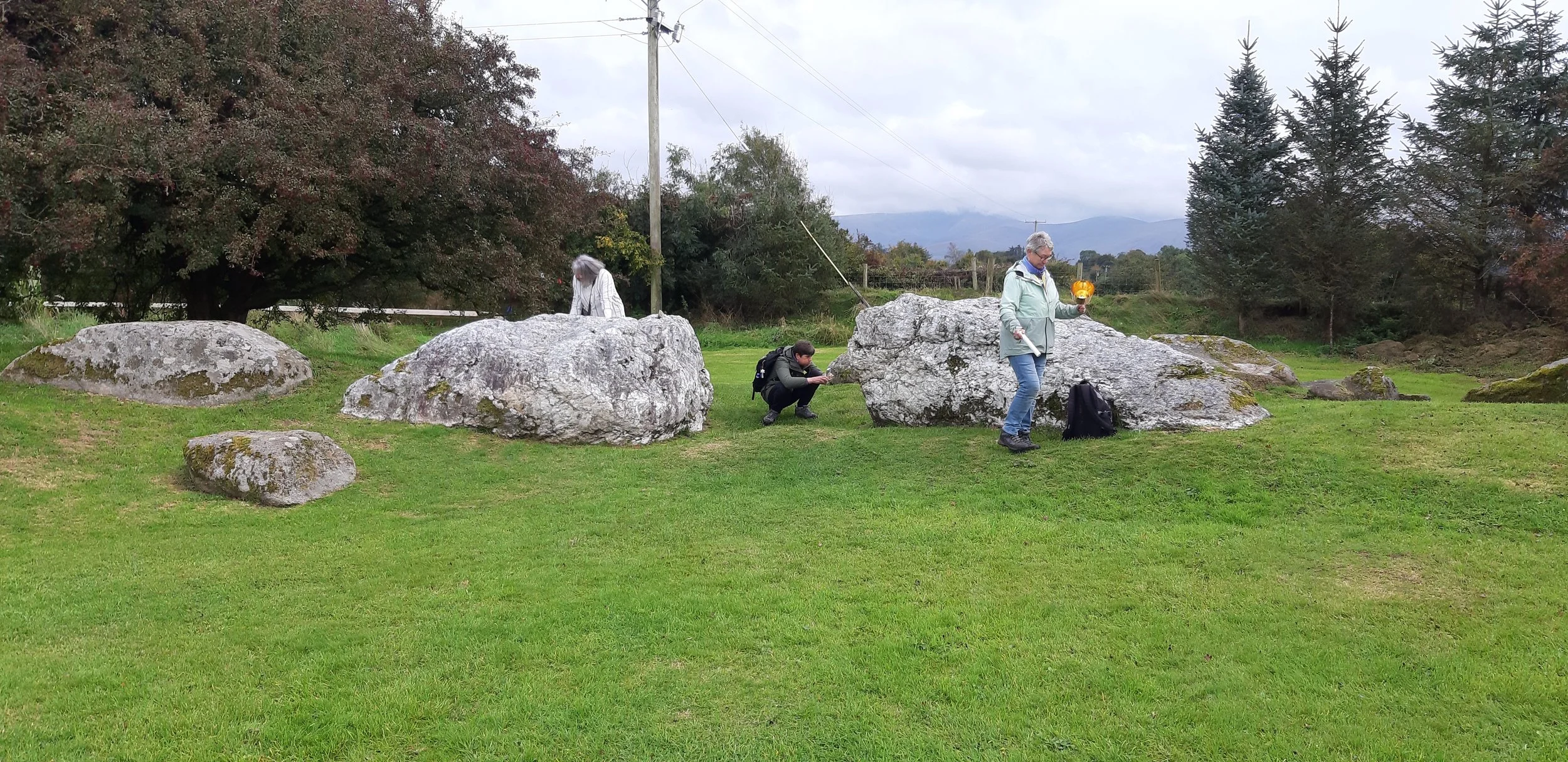
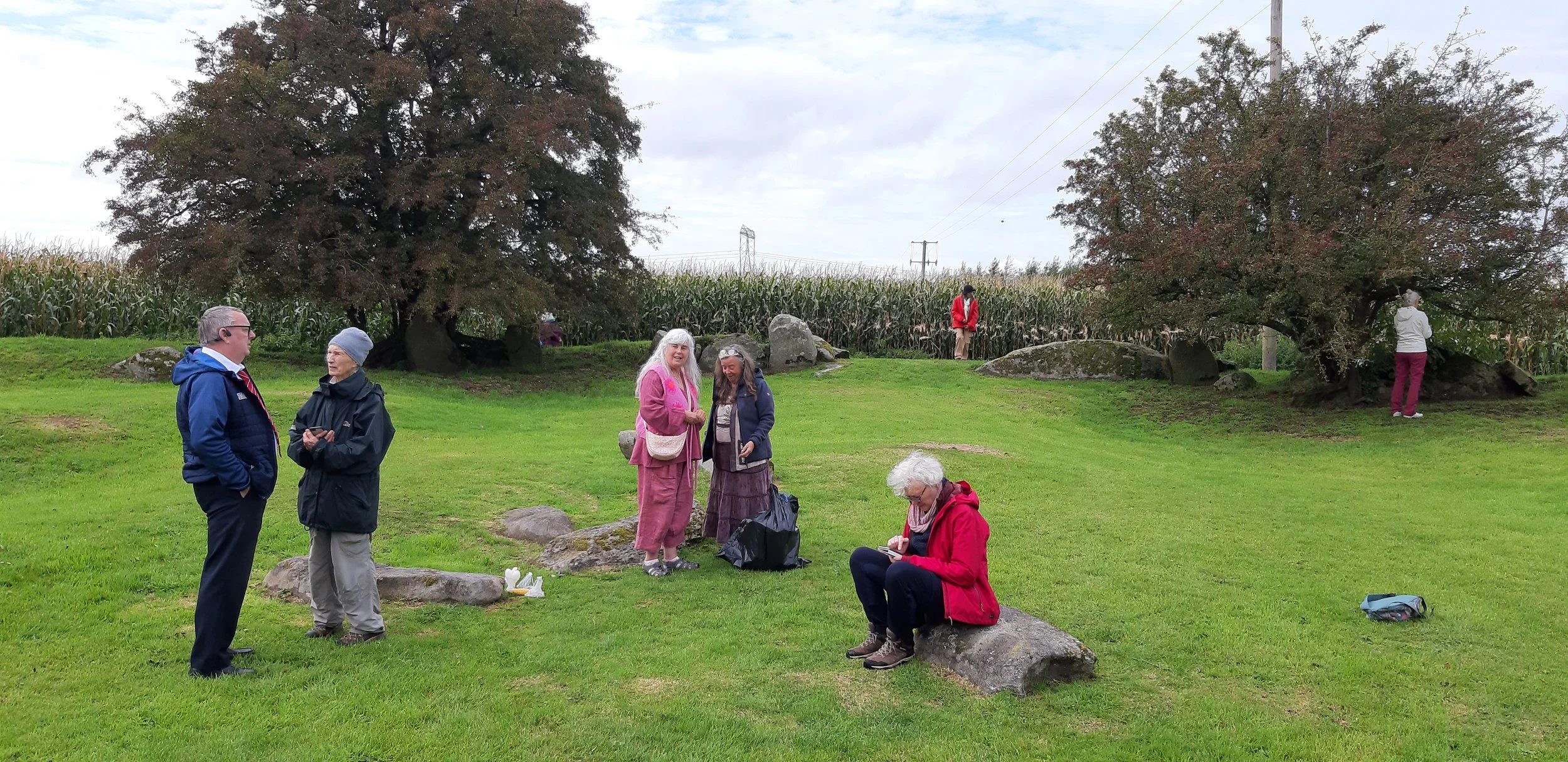
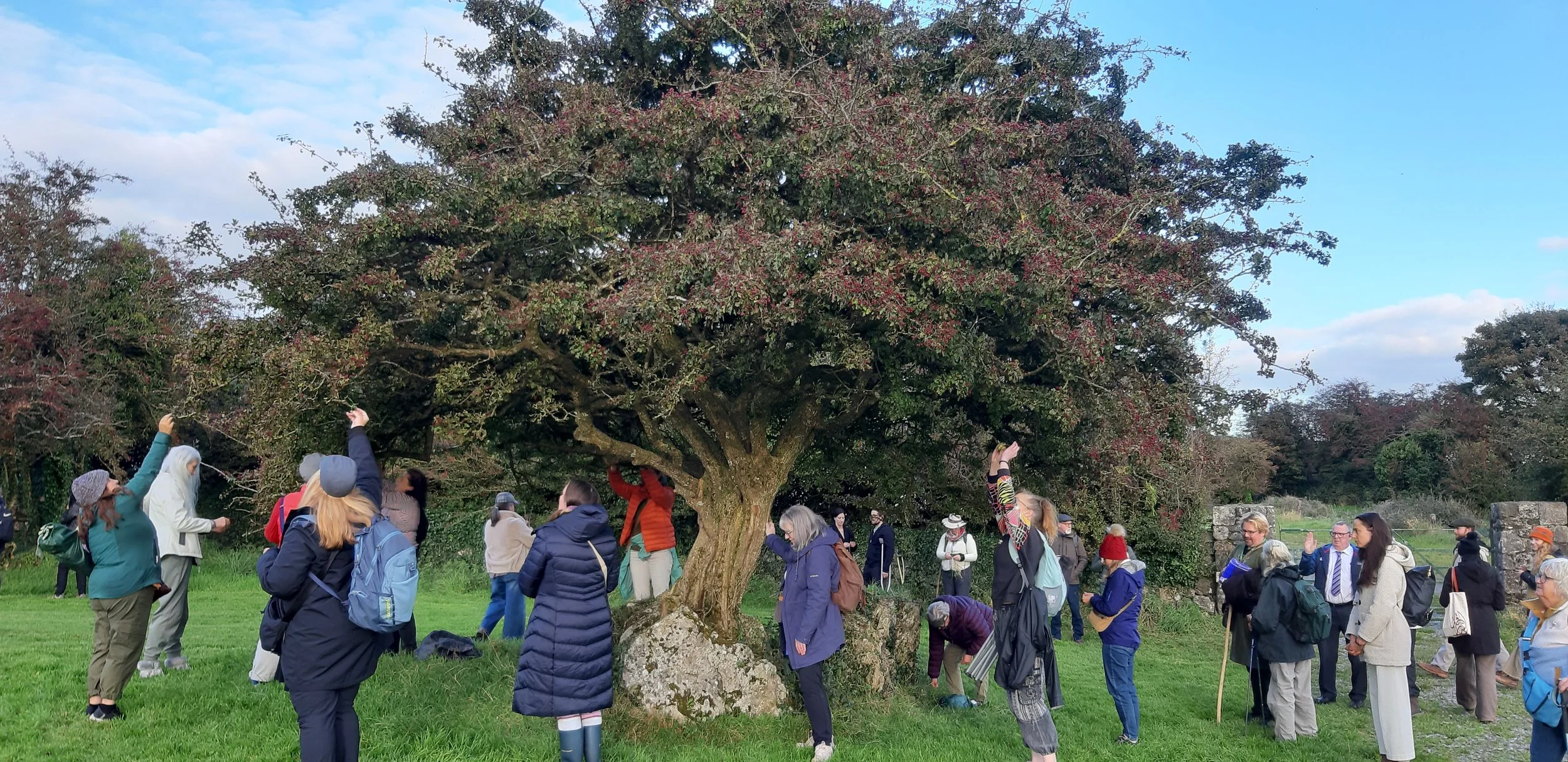
The last sacred site of our tour was the little-visited Castleruddery Embanked Stone Circle. This is similar to the vast Embanked Stone Circle of the Lios at Grange, although not so large or well preserved. The last time I was here with a group in 2017, it was quite neglected and overgrown, although that did not diminish its charm and magic. This time, it had had a make-over, with new fences on the approach, and it had all been recently mowed, so felt cared for. There are two massive quartz stones at the entrance, aligned on the Samhain and Imbolc sunrises. This was clearly a site for gathering at those festivals; it has a warm, welcoming quality, with several majestic hawthorns growing on the bank – so is definitely a place for connecting with the otherworld and the Sidhe. It was the perfect place to end our journey through the magical land of Eriu, before our closing circle at our Dublin airport hotel, and our homeward journeys the following day.